
News
Ethiopia: Hailemariam Desalegn sworn in as Prime Minister
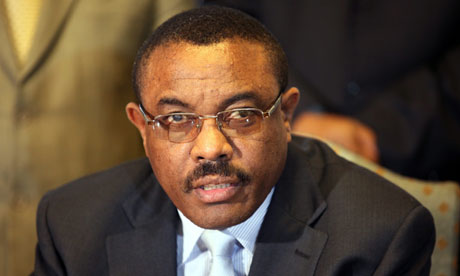
“We are full of hope about the new leadership,” said Mohamed Keita of the Committee to Protect Journalists. He added that the group has guarded optimism until it sees what kinds of freedoms are allowed.
Speaking to parliament in the nationally broadcast ceremony, Desalegn said Ethiopia would remain “a stable and democratic nation” and would continue its security role in the region, including in Somalia and by aiding talks between Sudan and South Sudan.
Zenawi was credited with improving Ethiopia’s economy and was well liked in Washington for his cooperation on security matters. But critics denounced his country’s human rights record and the few opportunities allowed for opposition parties. With Desalegn’s ascension, civic groups and the opposition are holding out hope he will start to open the country’s politics.
Making changes before Ethiopia’s 2015 national elections could be difficult, though. Unlike Zenawi and his inner circle, Desalegn did not take part in the 17-year armed struggle that unseated brutal communist leader Mengistu Hailemariam, the struggle that saw Zenawi come to power in 1991. It’s not clear how much freedom Desalegn will have to make changes that the older leaders oppose.
Ethiopian and U.S. officials signaled that the countries’ cooperation would continue. Ethiopia borders Somalia and has sent troops there several times to battle al-Qaida-linked militants. The country allows the U.S. military to operate drone aircraft from its runways.
“I doubt that there will be any major changes in the U.S.-Ethiopia relationship, but there will inevitably be changes on the margins as time goes on,” said David Shinn, the U.S. ambassador to Ethiopia from 1996-1999.
In his speech to parliament, Desalegn vowed to sustain his predecessor’s polices including ambitious economic goals “to take the country among middle income economies in just a decade.” Zenawi was hailed for overseeing economic progress.
