
Business
East Africa’s $5 Billion Oil Pipeline Set to Begin Exports by October
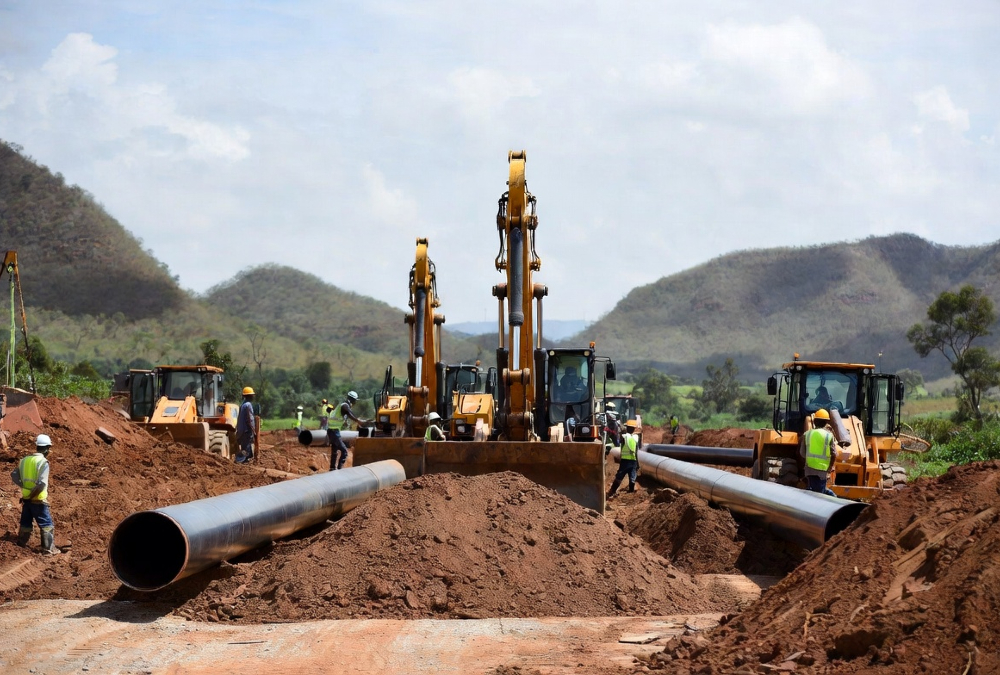
Uganda and Tanzania expect crude oil exports to begin in October from the East African Crude Oil Pipeline (EACOP), marking East Africa’s entry into global oil markets.
The 1,443-kilometer (897-mile) pipeline connecting Uganda’s Albertine Graben to Tanzania’s Indian Ocean port of Tanga was 75 percent complete by December 2025, officials said. The US$5 billion project has seen US$3.3 billion invested, with all pipeline segments laid by November.
Ernest Rubondo, chief executive of the Uganda Petroleum Authority, called EACOP “the backbone of Uganda’s crude oil exports and a key driver for economic transformation.”
Energy ministers from both countries confirmed the timeline during a January 5 stakeholder meeting in Dar es Salaam, targeting startup readiness for July 31, 2026. Construction has reached peak levels, with work progressing on above-ground installations and Tanga’s marine export terminal.
Once operational, EACOP will become the world’s longest heated crude oil pipeline, transporting Uganda’s waxy crude at approximately 50 degrees Celsius. At full capacity, it will carry up to 230,000 barrels daily to Tanga for export.
The pipeline unlocks Uganda’s estimated 6.5 billion barrels of crude reserves, establishing the country as a new African oil producer. Success depends on global oil prices and timely completion of upstream infrastructure.
Tanzania has already generated 50 billion Tanzanian shillings (US$19.5 million) from development levies, taxes, and construction charges. The project has employed approximately 1,200 Tanzanians, reinforcing Tanzania’s role as a regional energy transit hub.
Despite criticism from environmental and human rights groups, officials say EACOP developers – including TotalEnergies and China National Offshore Oil Company (CNOOC) – have incorporated emission management measures, with plans to power operations primarily through solar energy.
The pipeline represents a strategic push for infrastructure-led growth and regional integration across East Africa.
