
Life
Diversity an elusive goal for Pittsburgh police force
Thirty-six recruits will enter the city’s police academy today. Marlin Avant is the only one who is black…
Detective Tate said minority officers have a cultural understanding of certain neighborhoods and can defuse tense situations in places where residents are known to be wary of police.
As Mr. Avant put it, “People like to deal with what they’re familiar with, plain and simple. They look at a black officer and say, ‘I can understand his situation. It’s not too far from my own.’ “
The deficit of minority officers is particularly troubling to city officials as many of those already on the force become eligible to retire. That makes recruitment efforts all the more crucial as the city seeks applicants for a civil service exam in November, said Tamiko Stanley, the city’s Equal Employment Opportunities officer.
Before pursuing candidates for the 2008 exam, she waived application fees and lessened the number of college credits needed to take the test from 60 to 30; recruits still need 60 credits to enter the academy but can earn remaining ones as they wait to be called from a civil service list. That step and a series of grassroots outreach efforts at gathering spots in minority communities helped generate a record 280 minority applicants.
“We thought we were in a good position to get some diverse classes,” Ms. Stanley said. But that didn’t happen.
Of the 280, she said, seven were immediately disqualified from the test for lack of college credits. Only 138 of the original group showed up for the written exam, and 19 failed; of the remaining 119 candidates, another 19 failed or no-showed the oral exam, landing just 100 applicants on the civil service list. In the end, the 2010 graduating class of 34 officers included just one black and one Asian.
When the city began to assemble a second academy class from the list, 51 minorities were eligible, but only 26 returned packets expressing interest. Five failed to show up for a fitness exam, and 12 others failed it, leaving just nine for further consideration.
Among them was Mr. Avant, who had been working with juveniles and foster children in the meantime and feared he would be made to wait a second time for a police job. When he took a fitness exam and passed, he quickly moved from Braddock to Garfield to meet the city’s residency requirement, a hardship he was willing to take but some others are not.
Some young minorities considering law enforcement seek work outside the city entirely, said city Detective Brian Johnson, who has spoken to college groups, promoting his line of work. It’s not always an easy task.
“Among some segments of the African-American community, there is still a stigma attached to being black and a police officer,” he said. “My answer is always, true change comes from within. All the more reason to join.”
Mr. Avant, whose father worked as a community officer in Braddock for 20 years, said friends and relatives supported his decision to join the force. But he knows that’s not always the case.
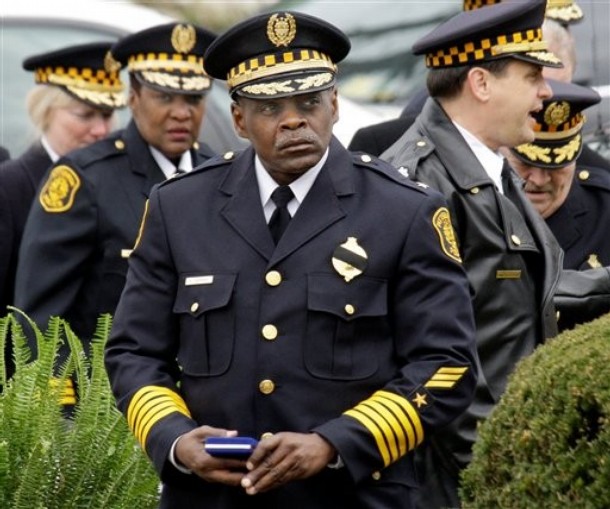
Police Chief Nate Harper (pictured) and several members of his command staff are black, yet some minorities may not consider law enforcement careers because they don’t see many on everyday patrol, Detective Tate said.
Chief Harper declined to comment for this story, but said through his spokeswoman that Pittsburgh is not the only city having trouble diversifying its department. Indeed, similar departments with comparable recruitment strategies don’t perfectly reflect their populations. For example, Columbus, Ohio, where more than 25 percent of the population is black, has a police force of 1,892 that is only about 11 percent black.
“We get a lot of applicants,” said Officer Jackie Cote of the Columbus Police Department’s minority recruiting unit. “But we start to lose a lot of people from the beginning.”
Pittsburgh will try new measures to find qualified minority candidates as they recruit for the November exam, Ms. Stanley said. But the persistent challenge rests in getting them hired.
The city will add a “community voice” to the board that oversees the oral exam, which in years past had been limited to law enforcement. The community representative, who has yet to be selected, likely will be a member of the clergy or a community figure.
