
Business
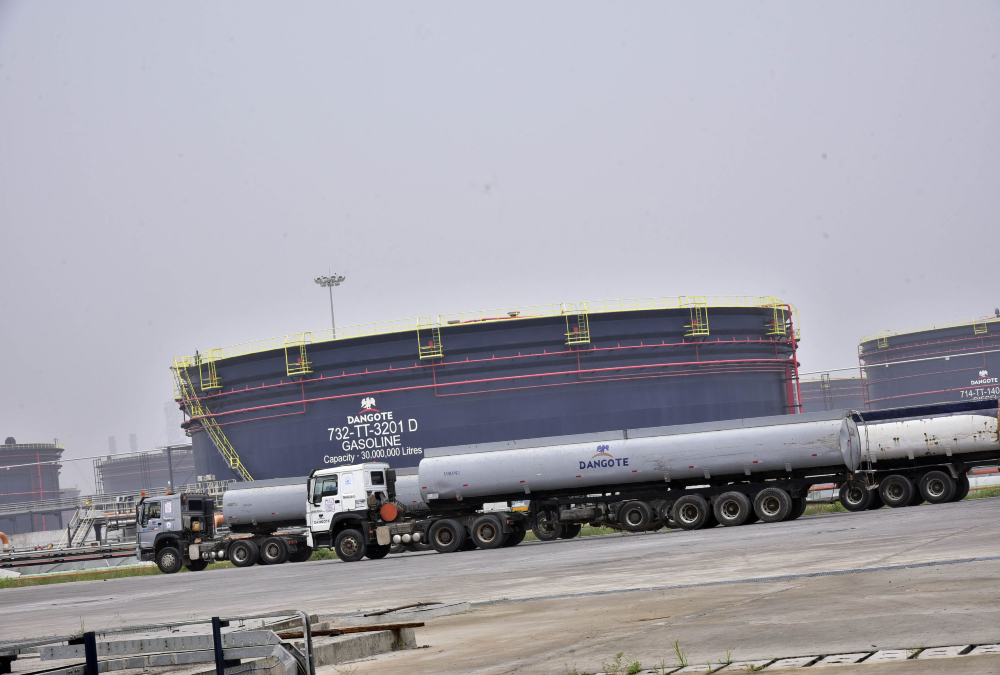
Dangote Refinery’s First U.S. Gasoline Export Signals a New Era for Nigeria

By Des H Rikhotso
Last week, the Gemini Pearl – a sleek, modern tanker – anchored at Sunoco’s Linden terminal in New York Harbor, discharging 320,000 barrels of ultra-low-sulfur gasoline. The cargo wasn’t from Texas or Louisiana.
It wasn’t even from Europe. It came from Lagos, Nigeria.
This wasn’t just another fuel shipment. It was a geopolitical inflection point.
The Dangote Refinery, Africa’s largest single-train petroleum complex and one of the most ambitious industrial projects of the 21st century, has officially entered the U.S. market. And it’s not coming as a supplicant – it’s coming as a competitor.
For decades, Nigeria was synonymous with crude oil exports – and chronic fuel imports. The country spent billions annually importing gasoline, diesel, and jet fuel, despite sitting atop one of the world’s largest proven oil reserves.
The Dangote Refinery, a US$20 billion privately funded marvel that began operations in May 2023, has flipped that script overnight.
Now, Nigeria doesn’t just export crude. It exports refined products that meet the strictest environmental standards in the world – including U.S. EPA Tier 3 specifications and European EN 228 norms.
And it’s doing so at a scale and cost that’s forcing global players to rethink their strategies.
Why This Matters: Three Global Shifts in Motion
1. Africa Is No Longer a Fuel Importer – It’s a Global Refiner
The Dangote Refinery’s capacity – 650,000 barrels per day – is larger than the entire refining capacity of most European nations. It’s designed to supply West Africa first, but its surplus is now flooding global markets.
This is the end of Africa’s era as a fuel-dependent continent. It’s becoming the continent’s energy engine.
2. Europe’s Dominance Is Cracking – And the Atlantic Basin Is Realigning
For 50 years, European refiners – from Shell in the Netherlands to TotalEnergies in France – dominated Africa’s refined fuel market, exporting diesel and gasoline at premium prices. Now, Dangote is undercutting them on price, quality, and proximity.
And it’s not stopping there. With U.S. imports now flowing, Dangote is directly challenging the traditional Atlantic trade lanes.
The days of Europe being the “default supplier” to both Africa and parts of North America are numbered.
3. The U.S. Is Quietly Becoming a New Customer – And That’s a Wake-Up Call
It’s counterintuitive: the world’s largest oil producer now imports gasoline from Nigeria. But the math is simple.
When a major refinery in New Jersey went offline in early 2025, U.S. Gulf Coast supplies strained. Dangote’s ultra-clean gasoline – produced with state-of-the-art hydrocracking and hydrotreating units – filled the gap seamlessly.
It didn’t need subsidies. It didn’t need political favors. It just worked.
This isn’t a one-off. The U.S. Energy Information Administration (EIA) now tracks Nigerian gasoline imports as a distinct category.
Dangote’s product is not just compliant – it’s competitive. And with more tankers scheduled for U.S. ports in Q3 2025, American distributors are quietly diversifying their supply chains.
That’s a strategic vulnerability for domestic refiners already facing aging infrastructure and regulatory headwinds.
The Bigger Picture: Foreign Reserves, Energy Sovereignty, and Geopolitical Leverage
Beyond trade flows, Dangote is transforming Nigeria’s macroeconomic trajectory. In 2023, Nigeria spent over US$7 billion importing refined fuels.
By 2025, that number is projected to drop below US$1 billion – while exports of refined products surge past US$10 billion annually. This isn’t just about profit.
It’s about sovereignty.
Nigeria is now earning hard currency not just from selling crude, but from converting it into higher-value products – reducing its vulnerability to global oil price swings and strengthening its foreign reserves. For a nation that has long been a victim of the “resource curse,” this is revolutionary.
The Road Ahead: Competition, Not Conflict
Let’s be clear: this isn’t about “winning” or “losing.” It’s about evolution.
The Dangote Refinery isn’t a threat to U.S. energy security – it’s a market signal. It shows that global refining is becoming more decentralized, more efficient, and more responsive.
It proves that emerging economies can build world-class industrial infrastructure without Western aid or subsidies.
For American policymakers, this should be a call to action – not alarm. The U.S. needs to invest in its own refining modernization, not assume global supply chains will remain static.
For European refiners, it’s a wake-up call: if you don’t innovate, you will be outcompeted.
And for Nigeria? This is only the beginning.
The Dangote Refinery has already begun exporting jet fuel to Brazil, diesel to Spain, and gasoline to the Caribbean. The next cargo may head to California. Or Florida. Or even the Pacific Northwest.
The age of the African refiner has arrived. And the world is watching.
Des H Rikhotso (PgDip-BA, MBL) is a seasoned C-suite Multi-Industry business executive with 25+ years of Business Leadership Experience across the South, East and Western Sub-Sahara Africa Region. Based in Kampala, Uganda he serves as East Africa Region Business Executive, driving Business Strategic Growth and Operational Excellence – contributing his Leadership Voice and Clarity to the Region. Des has held Business Leadership roles at BMW Group Africa, Volkswagen Group Africa, Peugeot Motors South Africa, Toyota/Lexus South Africa, Nissan Group of Africa, G.U.D Holdings (Africa Exports Operations Division) and The HDR Group of Companies. He holds Under-Graduate and Post-Graduate business degrees from the University of the Western Cape, Wits University (Wits Business School) and the University of South Africa.
