
News
CCJ president perplexed at slow adoption of institution in Caribbean
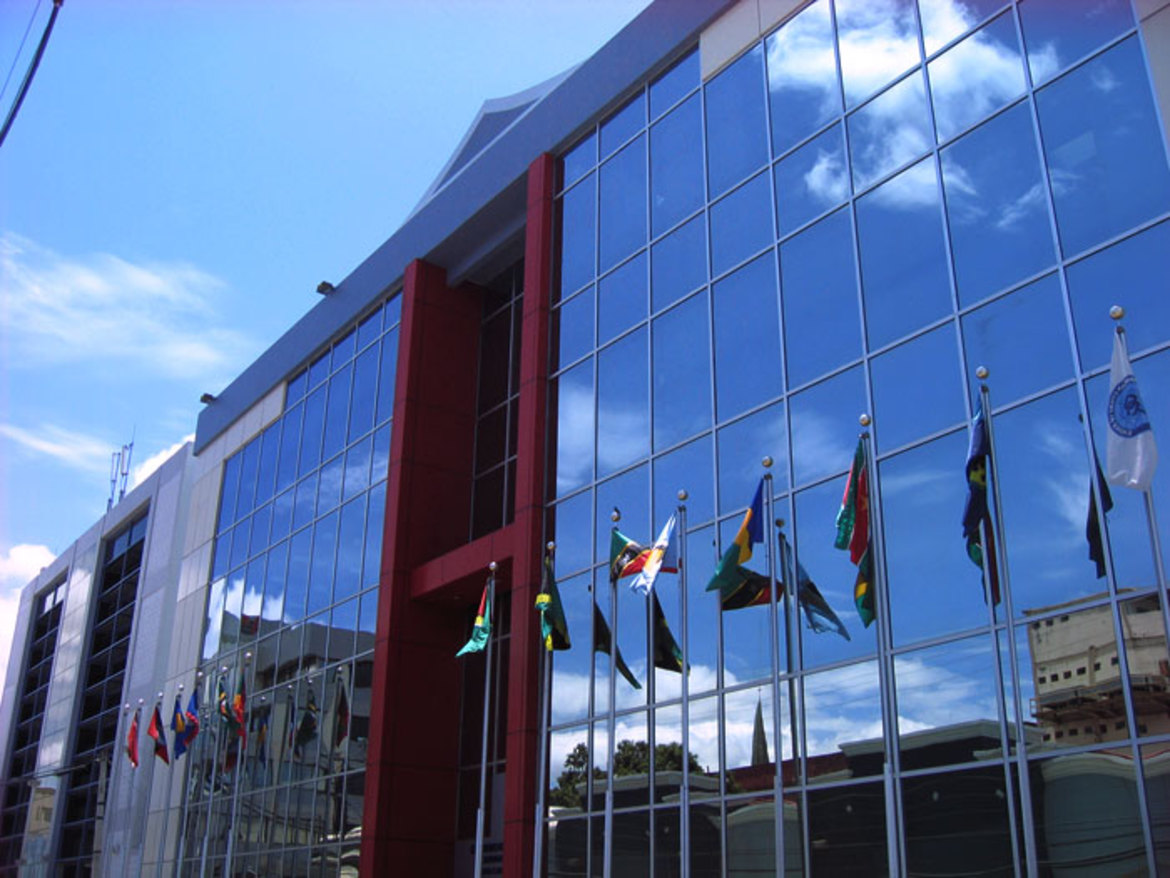
Caribbean Court of Justice (CCJ) president, Justice Adrian Saunders, says he remains perplexed that Caribbean people are still finding “excuses” in support of the London-based Privy Council as the region’s final court.
Saunders, who received an honorary degree of Doctor of Laws from the Cave Hill campus of the University of the West Indies (UWI), said that he remains confident that, like other regional institutions, the CCJ will be embraced by all the people of the Caribbean.
“I remain confident that, as is the case with, for example, the Caribbean Development Bank, the Caribbean Examinations Council and, of course, The University of the West Indies, to name just a few, the time will come when the CCJ also will be recognized as another of those Caribbean institutions whose vital contribution to the region can almost be taken for granted,” he said.
The CCJ was established in 2001 to replace the Privy Council as the region’s final court. But while all the Caribbean countries have signed on to the Court’s Original Jurisdiction, only Barbados, Belize, Dominica and Guyana are signatories to the appellate jurisdiction of the court that also serves as an international tribunal interpreting the Revised Treaty of Chaguaramas that governs the 15-member regional integration movement, the Caribbean Community (CARICOM).
Antigua & Barbuda and Grenada will hold national referendums on Tuesday on whether or not to replace the Privy Council with the CCJ.
Saunders told the ceremony that it is vital for Caribbean people with their fractured experiences over the past four centuries to have self-belief:
” A clear sense of ourselves. An understanding of our worth as human beings and of our ability to forge our own destiny
“It is perplexing to me, for example, that so many people in the region contrive to find excuse upon excuse to justify the anomaly that, after 50 years of political independence, the laws that we proudly make should ultimately be interpreted and applied by a British institution, staffed with British judges, all of whom reside in Britain.
“This, after CARICOM states, over 15 years ago, established their own court, precisely to serve that purpose. This, after US$100 million was spent to guarantee that court’s sustainability. This, after the court has successfully been operating for well over ten years serving the needs of some states.”
He said that, when he tries to explain this to his colleagues from Asia, Africa and Latin America, as he is sometimes obliged to do at judicial colloquia, “this ceases to be an anomaly.”
“In the face of the incredulity expressed by my colleagues, it becomes an embarrassment linked directly to our perception of ourselves and the level of confidence we have in our capacity to take full responsibility for our own governance” he explained.
Saunders, from St Vincent & the Grenadines, the 3rd Caribbean national after Trinidadian Michael de La Bastide and St Kitts & Nevis national Sir Dennis Byron to head the Trinidad & Tobago-based CCJ, said, “I temper my perplexity, I look to the future and I remain confident.
Source: Caribbean News Now
