
Life
Brazil: Supreme court votes to back Affirmative Action programs in education
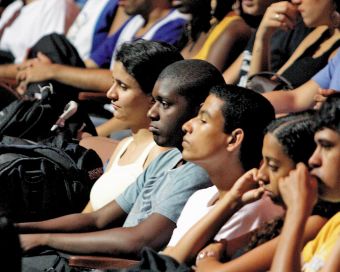
The Brazilian government’s statistics agency, using data from the 2010 Census, reported that in 2009, just 4.7 percent of black Brazilians over the age of 25 held a university degree, compared to 15 percent of whites. A decade earlier, 2.3 percent of blacks and 9.8 percent of whites had degrees. Similar inequalities are seen at all age and education levels.
While those figures show the gap between whites and other races in Brazil has actually widened, supporters say the gain in the percentage of nonwhites getting a university education is the more important statistic.
Backers say the use of scholarships, quotas and other policies aimed at getting more blacks and mixed-race Brazilians into universities is needed to right the historic wrongs of slavery, centuries of stark economic inequality and a society in which whites are overwhelmingly in leadership roles in government and business, despite Brazil having more citizens of African ancestry than any nation other than Nigeria. 51 percent of Brazil’s 192 million people are black or of mixed-race.
“If you’re going to write about discrimination against blacks you have to talk about the privileges whites enjoy. Those privileges are what’s at stake in the intensely emotional opposition to these policies,” said Eliza Larkin Nascimento, director of the Institute of Afro-Brazilian Research and Study in Rio de Janeiro. “They feel threatened. Their privileges are sustained by a system that perpetuates inequality, both in the form of extreme poverty and extreme privilege.”
Opponents say the idea of quotas is itself racist and that Brazil has no need for them, arguing there is little social tension among the races and the nation lacks the overt racism seen in many other nations.
“Racial policy, even in good faith, is state therapy for a disease that does not exist: We don’t have a racial identity,” Jose Ferreira Militao, a black activist and lawyer in Sao Paulo, wrote recently in the Estado de S. Paulo newspaper.
He argued that what’s needed are policies aimed at social, not racial, problems in Brazil, programs that use economic need as the criteria for university spots and scholarships. That, he said, would assist black and mixed-race Brazilians, who comprise 70 percent of the poorest 10 percent of the nation.
