
Life
Black in Brazil
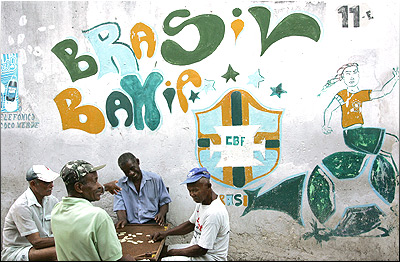
Black leaders also blame what they describe as decades of self-censorship about race spurred by the “racial democracy” vision of their country, which long defined Brazilian self-identity.
Preached in the early 20th century by sociologist Gilberto Freyre, the vision depicted a Brazil that was freeing itself of racism and even of the concept of race through pervasive mixing of the races.
Opponents of the affirmative-action bills echoed key points of Freyre’s argument, especially those about miscegenation. Census statistics show that about 30 percent of Brazilian households in 2000 were headed by couples from different racial backgrounds — six times the U.S. ratio.
Ali Kamel, director of the CGJ, Globo Journalism’s TV Globo, said Brazilians don’t think in terms of white and black, and argued that poverty affects all Brazilians. He blamed a collapse in public education and not racism for social disparities.
“Our big problem in Brazil is poverty, not racial discrimination,” Kamel said. “The racism here is at a degree infinitesimally less than in other countries.”
Opposition to the affirmative-action bills also came from some black leaders such as José Carlos Miranda, coordinator of Brazil’s Black Socialist Movement, who feared that racebased policies could aggravate racism.
“The worst thing we could do is pass laws that deepen divisions that already exist,” Miranda said. “What wounds us the most is class, and the only way to fight racism is to promote more equality.”
Other black activists, however, argued that race is the dividing factor and that racial mixing didn’t eliminate discrimination against nonwhites.
