
Life
Black in Brazil
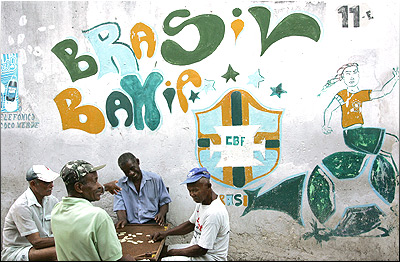
‘‘The place of blacks in Brazil is still the place of slaves.”
Alberto Borges, a 31-year old aspiring boxer from the slum, said that just being from his neighborhood is a strike against him.
“If you live in one of these houses, the people outside will call you preto,” Borges said, using a word for Afro Brazilians that many consider derogatory. “If you try to find a job and tell them where you come from, they won’t call back.”
Despite the disparities, debate about race is rare in Brazil., and problems are more felt than spoken about.
Afro Brazilians have never launched a civil-rights movement like that in the United States nor developed national black leaders in the mold of Martin Luther King Jr. or South Africa’s Nelson Mandela.
Also non-existent are black civic groups with the power of U.S. institutions such as the National Association for the Advancement of Colored People or financial networks that could spur black entrepreneurship.
A Backlash
Those who do speak out about racial disparities, such as TV da Gente did, are accused, even by some prominent Afro Brazilians of fomenting racial divisions or of outright racism.
‘‘Every time we try to put together a project like this, we are criticized by the government and everyone else who says there is no racism in Brazil,” said Hasani Damazio, TV da Gente’s fomer director of international programs. “It’s clear that race is treated very differently here than in the U.S.”
A key difference is that Brazil never imposed legal racial segregation like the United States and South Africa, which meant that Afro Brazilians didn’t have an institutional injustice to rally around.
