
Life
Black in Brazil
Jailson de Souza e Silva, who runs a Rio de Janeiro anti-violence advocacy group, said the split is stark in his city’s violence-torn slums, where Afro Brazilians make up the majority of residents. Two-thirds of the country’s homicide victims in 2004 were black.
“The objective here is not to preserve life, and hundreds of black men are dying every year,” de Souza e Silva said. “Meanwhile, in the rich, white parts of the city, every single death is big news. Our lives clearly don’t have equal value.”
Da Silva’s slum has been paralyzed in recent years by gang-related violence, and its middle-class neighbors have erected gated checkpoints around the slum to stop the killing from spilling into their streets.
“It is another sign of the inequality here,” da Silva said while gesturing to the rutted dirt road running by his house. “The government doesn’t bother to pave the streets here. We are just totally forgotten.”
Gap In North East
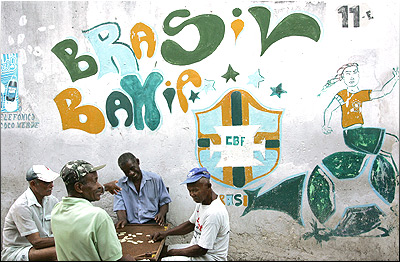
The divisions are felt even in the northeastern Brazilian city of Salvador, where more than three-quarters of the population is black and where African-based culture and religion are the mainstream.
Ivete Sacramento, who became the country’s first black president of a major university in 1998, said she is saddened every day when she looks out the balcony of her upper-middle-class apartment at the sprawling slum that sits just a few dozen yards away.
Except for her family and two other households, every resident in her 64-unit apartment tower is white. In the nearby slum, the racial equation is inverted, and white faces are rare. ‘‘No one has any idea that blacks can be anything more than maids,” said Sacramento, 54.
