
Business
Africa Industrialization Day: Unlocking Africa’s “value-added” industrial potential
Africa’s emerging connectivity and a workforce increasingly familiar with the digital world and new technologies will make it possible for the continent to take advantage of the fourth industrial revolution to improve productivity, create jobs, and extend social welfare.
Africa Industrialization Day, which occurred late last month, mobilizes the commitment of the international community to the continent’s industrialization and gives us the opportunity to reflect on the African Development Bank’s impact in this sector, one of its High 5 priorities.
From oil to cocoa, cotton to vanilla, Africa is rich in natural resources but its heavy dependence on commodity exports means it has yet to take full advantage of the added value that processing raw materials and manufacturing can bring.
The African Development Bank (AfDB) is working to change this by promoting successful industrial policies, attracting funding to infrastructure and industry and supporting the growth of capital markets to create quality employment that alleviates poverty.
The last decade has seen progress, with manufacturing growth in Africa outpacing the global growth rate. In 2019, Africa’s industrial gross domestic product (GDP) expanded by 17 percent to US$731 billion (in 2010 dollars), with the value-added of manufacturing surging by 39 percent, according to the Bank’s 2020 Annual Development Effectiveness Review (ADER).
But Africa’s industrialization is geographically limited, with around two-thirds of value-added manufacturing taking place in just 5 nations: Algeria, Egypt, Morocco, Nigeria, and South Africa.
This year, progress has been reversed by the COVID-19 pandemic, which has upended economic growth, disrupted trade and financial flows and triggered losses of millions of jobs.
The economic and social impact of the pandemic has injected more urgency into the drive to industrialize Africa, just as the African Continental Free Trade Area (AFCFTA) is set to reshape the continent into a singular market of 2.5 billion people by 2050.
Processing, manufacturing and tech
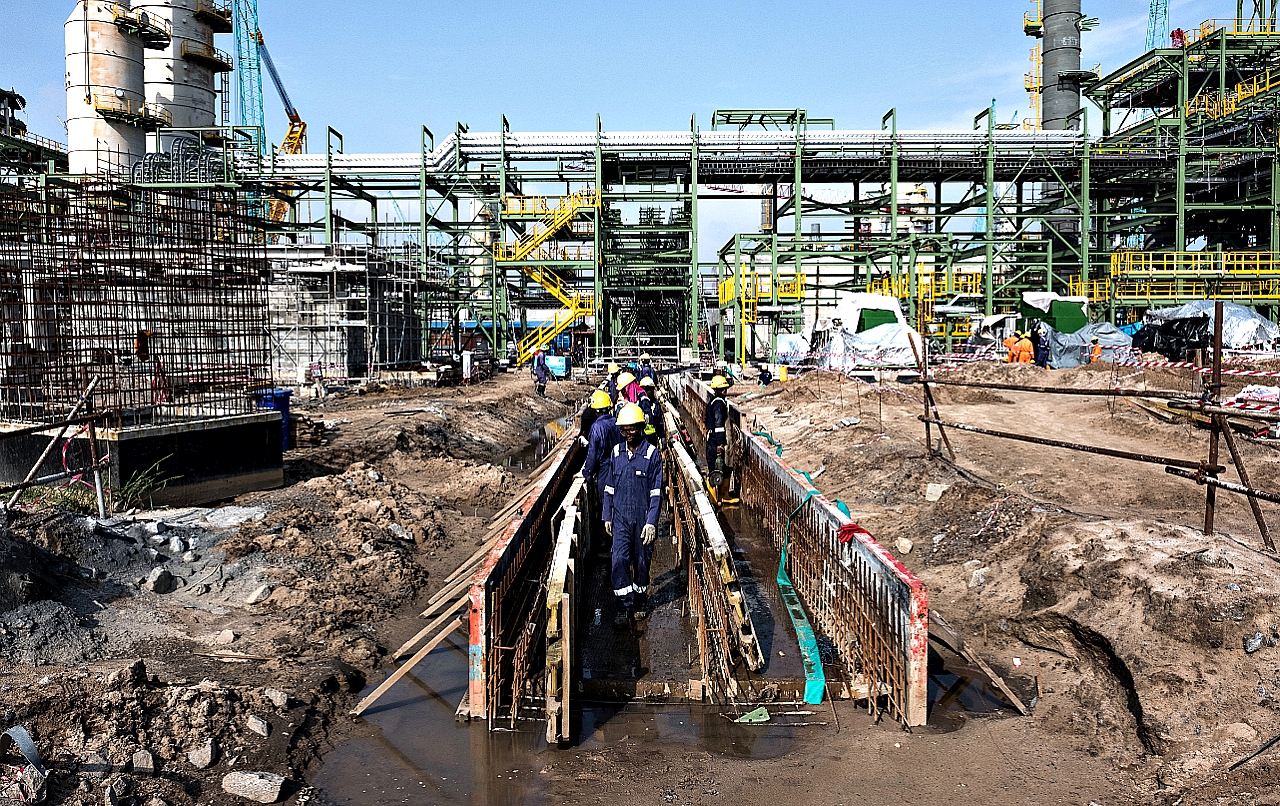
Just outside Cairo, the Egyptian Refining Company (ERC), a greenfield petroleum refinery, is one of the largest industrial units of its kind in Africa.
With nearly US$222 million in funding from the AfDB, the refinery converts the lowest-value fuel into 4.7 million tons of refined products and high-quality oil derivatives per year, meeting domestic consumption needs, cutting emissions from dirty fuels and reducing Egypt’s balance of payment deficit. The huge project created more than 15,000 jobs at peak construction and 1,000 permanent local job opportunities.
“From day one they were able to see that this project, which has been 12 years in the making, was going to have a transformative effect on Egypt’s economy,” said Ahmed Heikal, chairman and founder of ERC’s parent company, Qalaa Holdings.
In 2019, 1 million people across Africa benefited from the AfDB’s industrial investee projects. Turnover from investments in micro, small and medium-sized enterprises (MSMEs) almost trebled, reaching US$1 billion and far exceeding targets.
Some of the best opportunities for Africa’s industrialization lie in agriculture. Crucial to this sector is the AfDB’s support of Special Agro-Industrial Processing Zones (SAPZs), which strengthen African countries’ ability to attract private sector investment by bringing policy, investment and infrastructure together, usually in a rural area with high agricultural output.
Take South Africa, where the AfDB is supporting the development of 22 SAPZs. One of them, Bokomoso Ba Rona SAPZ, aims to rehabilitate an area and develop a post-mining economy on a 30,000-hectare site owned by mining company Sibanye Stillwater.
“We are aiming to attract private sector investment, which will drive agro-processing and build a strong value chain,” said Noxolo Mtembu, Project Manager at the Gauteng Infrastructure Financing Agency, which is responsible for developing the SAPZ.
Africa’s emerging connectivity and a workforce increasingly familiar with the digital world and new technologies will make it possible for the continent to take advantage of the fourth industrial revolution to improve productivity, create jobs, and extend social welfare.
New industries have transformed the fabric of local economies, for example in Nabeul, in north-eastern Tunisia, once most famous as a craft and tourist center.
Now Nabeul is becoming as well known for its high-tech industries. With financing from the Bank, the MEDIS pharmaceutical laboratory was established to produce generic medicines, creating thousands of skilled jobs and becoming one of the region’s biggest employers.
The laboratory has provided formal, secure jobs for many who otherwise would have been confined to informal work or unemployment.
“My job with MEDIS has given me freedom and dignity. I am not asking for a handout and I am not asking anything of anyone,” said employee Sabra Gmati.
“If MEDIS or a business like it wasn’t in Nabeul, I would be unemployed and I would stay at home.”
Modern Diplomacy © Copyright 2020
