
Life
More African American students graduating, but number still far behind general population
By Robert Stitt
May and June are graduation months for students throughout north America. This is a time when families proudly watch their sons and daughters walk across the high school stage and head off into adulthood with a diploma in hand.
Statistically, the number of students receiving diplomas has increased to 81.4 percent, the highest number in the history of the United States. Better yet, that rate looks like it may top 90 percent in the next five years if the trend continues. Sadly, not all graduation statistics are as pleasant as this one.
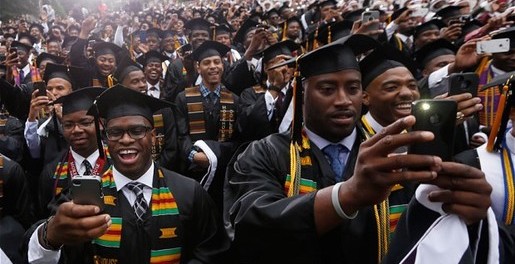
African American students are graduating at a record rate of 70.7 percent. That sounds excellent when you consider where it once was, but it is still over 11 percentage points lower than students of other races. In fact, when you look at those numbers from another angle, it shows that almost one-third of African American students will not graduate from high school. Low income students and students with disabilities are in similar positions.
Some states, like Alabama and Mississippi, have made gains in the graduation rates among students of color, and states like Maryland, North Carolina and Tennessee have African American graduation rates near 80 percent. Those states, however, only account for 10 percent of the Black students in the nation.
The states that have the most African American students, including California, Georgia, Florida, Illinois, Michigan, New York and Ohio only have graduation rates for African American students in the 60 percent range, and many of those states are seeing declines.
With increasing numbers of students graduating, it makes the haves and have-nots gap that much larger. Research has shown again and again that students who do not graduate are more likely to live in poverty and struggle with health-related issues. They are also more likely to end up in jail.
Alma J. Powell, chairwoman of America’s Promise Alliance, notes that if the high school dropout rate was cut in half, not only would we have a more qualified work force, but the nation would save billions of dollars each year.
Ms. Powell says that the number one thing that students need, according to the students themselves, is positive adult role models who take the time to help them realize their dreams. While we certainly need to work on equity in our schools, and quality teachers for all, we also need to pay attention to each individual student before they head down the wrong path. Powell notes that this is not just a job for teachers, but for all of us.
Since high school graduation rates are directly tied to economic success, the likelihood of committing crimes, and a person’s overall health, it is in all of our best interests to have as many students of all races, abilities and genders graduate as possible. It sounds cliché, but they really are our future.
