
News
Chicago’s stop and frisk policy worse than New York’s – ACLU
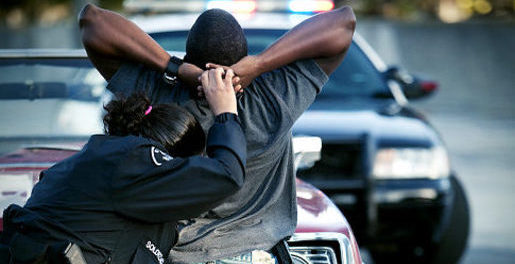
Chicago police officers initiated stop and frisk encounters at a much higher rate last summer than their New York City counterparts ever did, and just like with New York’s heavily criticized program, Chicago blacks and other racial minorities were disproportionately targeted, according to a civil liberties group.
The American Civil Liberties Union (ACLU) of Illinois released a report Monday saying it identified more than 250,000 Chicago stop and frisk encounters in which there were no arrests from May through August 2014. African Americans accounted for nearly three-quarters of those stopped, even though they make up about a third of the city’s population. On a per capita basis, Chicago police stopped 93.6 people per 1,000 residents, or more than four times New York’s peak rate of 22.9 stops per 1,000 residents, which happened during the same four-month period of 2011.
“The Chicago Police Department stops a shocking number of innocent people,” said Harvey Grossman, the ACLU’s legal director. “And just like New York, we see that African Americans are singled out for these searches.”
People were far more likely to be stopped in predominantly black communities and African Americans were more likely to be the target of stops in predominantly white neighborhoods, the study found. For example, African Americans accounted for 15 percent of the stops in the Jefferson Park area, even though they made up just one percent of its population.
The ACLU said it also found that police gave no “legally sufficient reason” for initiating many of the stops. It said it examined a random sampling of “contact cards,” which officers are required to fill out whenever they make such a stop. On half the cards, the officers didn’t state a reason for the stop, and in some cases, they stated that they stopped someone for a reason that wasn’t related to suspected criminal activity.
Grossman said the information that was on the cards was woefully inadequate, and the cards did not indicate that a person had been stopped and frisked, which the ACLU researchers can only assume happened.
Police officials responded Monday by saying that the department prohibits racial profiling and other “bias based policing.” They said over the last 3 years the department has improved training to ensure that police officers are aware of that policy and comply, including requiring more detailed documentation and adding more supervision.
It also released figures showing that the percentage of contact-card incidents is closely aligned with the percentage of police case reports where a crime suspect was identified by race.
“People should be stopped based on crime data and crime information. Nothing else,” Police Superintendent Garry McCarthy said in a written statement.
But the use of contact cards has dramatically increased since McCarthy started running the department in 2011.
