
Life
Census shows whites lose US majority among babies
WASHINGTON (AP) – For the first time, more than half of the children under age 2 in the U.S. are minorities…
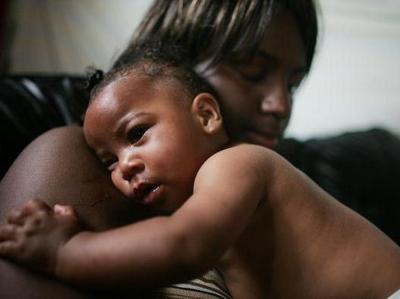
Because minority births are driving the rapid changes in the population, “any institution that touches or is impacted by children will be the first to feel the impact,” Johnson said, citing as an example child and maternal health care that will have to be attentive to minorities’ needs.
The numbers come amid public debate over hotly contested federal and state issues, from immigration and gay marriage to the rising cost of government benefits such as Medicare and Medicaid, that are resonating in different ways by region and demographics.
Alabama became the latest state this month to pass a wide-ranging anti-immigration law, which in part requires schools to report students’ immigration status to state authorities. That follows tough immigration measures passed in similarly Republican-leaning states such as Georgia, Arizona and South Carolina.
But governors in Massachusetts, New York and Illinois, which long have been home to numerous immigrants, have opted out of the federal Secure Communities program that aims to deport dangerous criminals, saying it has made illegal immigrants afraid of reporting crimes to police. California may soon opt out as well.
States also are divided by region in their attitudes about old-age benefits and gay marriage, which is legal in five states and the District of Columbia.
Among African-Americans, U.S. households headed by women — mostly single mothers but also adult women living with siblings or elderly parents — represented roughly 30 percent of all African-American households, compared with the 28 percent share of married-couple African-American households. It was the first time the number of female-headed households surpassed those of married couples among any race group, according to census records reviewed by Frey dating back to 1950.
While the number of black single mothers has been gradually declining, overall marriages among blacks are decreasing faster. That reflects a broader U.S. trend of declining marriage rates as well as increases in non-family households made up of people living alone, or with unmarried partners or other non-relatives.
Female-headed households make up a 19 percent share among Hispanics and 9 percent each for whites and Asians.
Other findings:
–Multi-generational households composed of families with grandparents, parents and children were most common among Hispanics, particularly in California, Maryland, Illinois, Nevada and Texas, all states where they represented roughly 1 in 10 Latino households.
–Roughly 581,000, or a half percent, of U.S. households are composed of same-sex unmarried couples, representing nearly 1 in 10 households with unmarried partners. Unmarried gay couples made up the biggest shares in states in the Northeast and West, led by the District of Columbia, Oregon, Delaware, Massachusetts, Maine and Vermont. The largest numbers were in California and New York, which is now considering a gay marriage law.
–Minorities comprise a majority of renters in 10 states, plus the District of Columbia — Hawaii, Texas, California, Georgia, Maryland, New Mexico, Mississippi, New Jersey, Louisiana and New York.
Tony Perkins, president of the Washington, D.C.-based Family Research Council, a conservative interest group, emphasized the economic impact of the decline of traditional families, noting that single-parent families are often the most dependent on government assistance.
“The decline of the traditional family will have to correct itself if we are to continue as a society,” Perkins said, citing a responsibility of individuals and churches. “We don’t need another dose of big government, but a new Hippocratic oath of ‘do no harm’ that doesn’t interfere with family formation or seek to redefine family.”
Copyright 2011 The Associated Press.
