
Life
Census: Fewer black children in biggest US cities
NEW YORK (AP) – The inner-city neighborhoods that have served for generations as citadels of African-American life and culture have been steadily draining of black children…
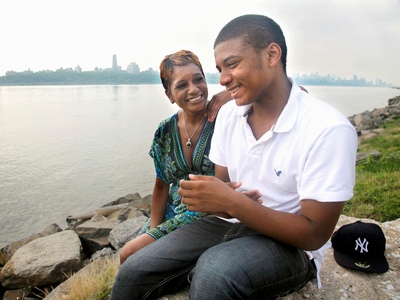
The Harlem of the past 10 years has been another place where drops in violent crime and a gradual erasing of decades of blight have brought an influx of new residents and concerns about the neighborhood’s heritage.
It would be easy to blame gentrification for pushing young families out, yet Census data shows that the sections of the neighborhood with the steepest drops in the number of black children are those where economic recovery has been more sluggish.
Consider census tract 232, an eight-block area of tenements and public housing projects in Central Harlem that saw its population of black children fall by 830, or 38 percent, over the past 10 years:
Yes, the neighborhood now has a Starbucks and two new supermarkets close by, but gunmen shot up the playground on 143rd Street in 2006, wounding three adults and a 6-year-old girl. City officials tried to close the local elementary school two years ago for poor performance. At the public housing project on Frederick Douglas Boulevard, a police officer had to rappel down the side of the building in 2003 to tranquilize a 400-pound tiger living in a resident’s apartment.
Last summer, officers patrolling a late-night block party fired a fusillade of bullets at two men struggling over a gun, killing one of them, severely injuring the other and wounding three innocent bystanders (plus two fellow officers). It all took place a block from Sharpton’s headquarters.
Carnetta Clark, a retired tenant leader in one of the two large public housing projects in the neighborhood, said she has noticed fewer children in the area now than when she first moved in nearly 20 years ago. But she doesn’t think it is because violence is frightening parents away.
If anything, she said, the neighborhood has gotten safer and more stable over the years.
“There are a lot of older people in the neighborhood now,” she said. “There are less people hanging out on the corners. The police are watching, taking care of things. I’ve always felt safe. Even when I was working nights. I never feared living here.”
Indeed, there are still plenty of kids in the neighborhood — more, in fact, per adult than the national average.
State Assemblyman Keith Wright, whose district covers Central Harlem, has noticed fewer children in the area as well, but he, too, thinks the phenomenon has less to do with flight from crime or decay, and more to do with the high price of city living.
“You don’t see those big families anymore,” Wright said. “A lot of our younger folks, I find, are moving to New Jersey. They think the city life is too expensive. It comes down to a matter of economics,” he said.
Some black city residents, he said, are also migrating “back down South, where they think the dollar will go farther.”
That migration has been evident in places like Henry County, Georgia, an area of suburban Atlanta that has seen its black population more than triple in the past decade. Blacks now make up 37 percent of the county of nearly 204,000 people.
The trend has also been showing up in a less visible way in countless mostly white suburbs like Livonia, Michigan, outside of Detroit. Just a decade ago, there were 951 black people living in the entire city, out of a population of around 100,000. Now there are 3,309. The same trend has repeated in white suburbs across the country.
“Face it: In a lot of suburbs, there was a distinct effort to keep blacks out,” said David Bositis, a senior researcher at the Joint Center for Political and Economic Studies and former Census Bureau demographer.
Those barriers have now been falling, he said, opening the door for blacks to follow in the footsteps of white families who had their own diaspora to the suburbs after World War II.
“More African Americans are going to college. There were big income gains during the Clinton administration,” Bositis said. “Now they are moving to the suburbs where they have better schools … They don’t want their children in inner-city schools.”
Even cities that saw a large rise in their overall black population saw their numbers of black children fall, or grow at a much slower rate. In Phoenix, the number of black adult residents grew by 44.8 percent over the past decade, but added fewer than 4,000 black children, for a growth rate of 18.6 percent. Houston added 21,324 black adults, but had 23,219 fewer black children.
On a national level, the number of black children has inched down by only 2.3 percent, compared to a much larger 9.8 percent drop for white children.
Fewer children in a city isn’t necessarily a sign of abandonment. After all, one of the hallmarks of poverty is an overabundance of children, packed into overcrowded apartments and schools, with a paucity of adult oversight.
“There is nothing inherently bad,” about a city having fewer children, Bositis said. “On one level, it is a big plus for the cities. People without children are much cheaper than people with children. Especially young people. They are making very little in way of demands on city services.”
Copyright 2011 The Associated Press.

