
Business
CARICOM: Harmonized cross-border trade needed for economic integration
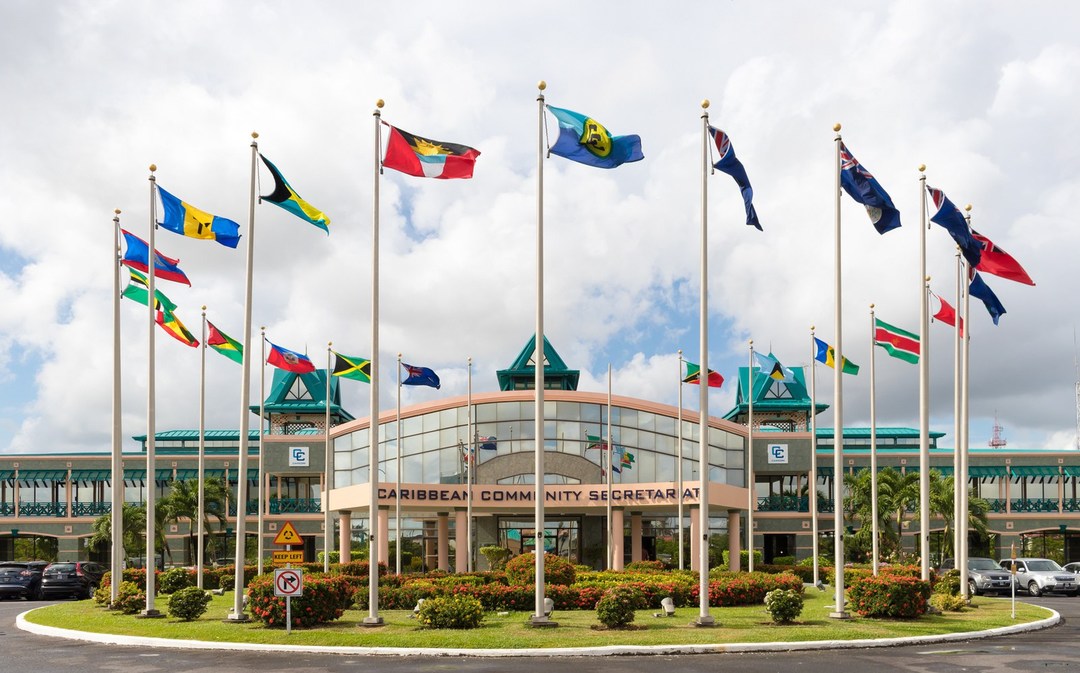
Harmonized approaches to conducting trade across borders in the Caribbean and effective customs valuation are among the steps that must be taken towards full economic integration within the Caribbean Community (CARICOM).
CARICOM Assistant Secretary-General, Trade and Economic Integration, Joseph Cox, said earlier this week, that harmonized laws, procedures and best practices would increase the predictability with intra-regional movement of goods under the CARICOM Single Market and within the context of the CARIFORUM-EU Economic Partnership Agreement (EPA).
He was at the time addressing the opening ceremony of a 3-day regional workshop targeting Customs officials from across the Caribbean Forum of African Caribbean and Pacific States (CARIFORUM) States. The workshop on the Single Administrative Document (SAD) and Customs Valuation, is aimed at building capacity in CARIFORUM.
Trade Facilitation
According to Cox, trade facilitation was high on the Region’s agenda. “As the trading environment continues to evolve, and as the Community seeks to deepen the integration process, trade facilitation has shifted to a higher level of priority on the regional trade agenda”, he said.
Providing a synopsis of steps that the Region had taken so far, the Assistant Secretary-General pointed out that with the Community’s approval of model Harmonized Customs Bill and Regulations in September 2016, work had advanced to develop a CARICOM Customs Procedure Manual. With the signing last month of a Memorandum of Understanding between the CARICOM Secretary-General, Ambassador Irwin LaRocque and the Secretary-General of the World Customs Union, Kunio Mikuriya the Region is positioning itself to become significant players in the future landscape of trade with Europe, he said.
The MOU places emphasis on training coordination, cooperation, and capacity building.
A study that was conducted in preparation for the implementation of the EPA recommended the development of SAD. The study assessed the state of readiness of the customs administrations in CARIFORUM States. The CARICOM Secretariat began work to develop the SAD in 2010. The SAD is to be used to prepare customs declarations in their EPA and other trading arrangements.
In his remarks, the Assistant Secretary-General also placed emphasis on customs valuations in the Region and the mobilising resources to confront those challenges, including revenue leakage.
“Our encounters with regional customs authorities suggest that non-compliance among traders to declare true and correct values is the single biggest cause of revenue leakage, with a conservative estimate of 20 percent of projected revenue being lost. Our expectation from this workshop is that you the participants will develop a clear understanding of how to put into practice, policy guidelines that are effective at reducing revenue leakage”, he said.
Adam Wisniewski, First Secretary, Trade Affairs Manager, European Union Delegation to Barbados, the Eastern Caribbean, the OECS and CARICOM/CARIFORUM also spoke at the opening ceremony.
He pointed out that the EU was the main partner in the ACP TradeCom II Program which focuses on economic integration. He said the harmonization of customs procedures was a very important step towards concretizing regional economic integration and inclusion in the global trading arena.
Source: St. Kitts & Nevis Observer
