
Life
Black in Cuba
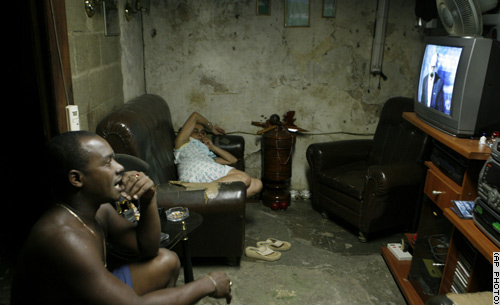
For Denny, one of six children, the color quagmire astonishes even him sometimes. One sister is married to a light-skinned Cuban who considers himself white, and another is married to a Spaniard. And even though his complexion would allow him to claim something other than black, he says, adamantly and without any reservation, “Me, I am black. I choose to be black.”
This identification, he says, was reinforced by his experiences in schools where teachers often favored his lighter-skinned classmates.
“Even though he knew they did not have the answer,” he recalled of one teacher, ‘‘he would rather call on them than ask me.”
And while Cubans of his mother’s and grandmother’s generations readily accept endearing uses of negro or negrito, his peers are treating it as their “N” word.
“It’s unacceptable,” said Denny, whose access to the outside world via illegal Internet and satellite TV hook-ups have given him a perspective on race that Cubans in general lack.
He pays for those with U.S. dollars he earns, a relative rarity for Afro Cubans. Since whites make up the overwhelming majority of the Cuban exile (population), whites get the bulk of the cash remittances sent to relatives on the island. A study in 2000 by UM’s Cuba studies institute found that the average white Cuban received US$81 a year in remittances, compared to US$31 for non-white Cubans.
Denny, the would-be hip hop performer, said he also sees racial changes coming through his kind of music, which sometimes defies the government and peppers its rhymes with references to racism.
He remembers one man in particular who landed in jail. ‘‘He was rapping, ‘If you are black, and feel that you are treated equal,’ raise your hand. . . . He was arrested by the police.”
