
Life
Black in Cuba
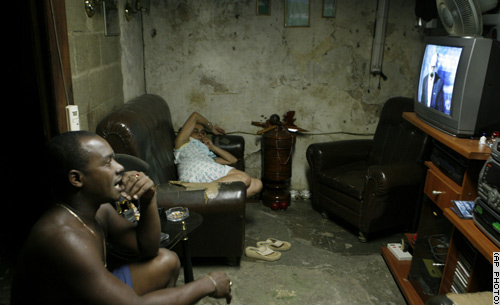
“This country has taken away all of my will to live in it,” said Cito, 52, whose tiny and sparsely furnished apartment seems like a luxury compared with the rest of his crumbling building. Cito, 52, who is dark-skinned and has the body of a linebacker, recalled his early days in medical school when he dated his now ex-wife, who is white.
He recalled a running conversation his future mother-in-law would have with her daughter: “He’s not a bad guy. I know his family. But there are a lot of other young men in the school you can date. Why him?”
He knew exactly what she meant; she did not want a black son-in-law.
Disparity In Numbers
Cuba’s official statistics offer little help on the race issue. The 2002 census, which asked Cubans whether they were white, black or mestizo/mulatto, showed 11 percent of the island’s 11.2 million people described themselves as black. The real figure is more like 62 percent, according to the Institute for Cuban and Cuban-American Studies at the University of Miami (UM).
And the published Census figures provide no way at all to compare blacks and whites in categories like salary or educational levels. Ramón Colás, who left Cuba in 2001 and now runs an Afro-Cuba race-relations project in Mississippi, said he once carried out his own telling survey: Five out of every 100 private vehicles he counted in Havana were driven by a black Cuban.
The disparity between the census’ 11 percent and UM’s 62 percent also reflects the complicated racial categories in a country where if you look white you are considered white, no matter the genes.
“You know, there are seven different types of blacks in Cuba,” said Denny, who now works as a waiter but dreams of a hip-hop career. From darkest to lightest, they are: negro azul, prieto, moreno, mulato, trigueño, jabao and blanconaso.
