
Business
Agro-Processing Lessons Learned the Hard Way: Why Certification Should Come First
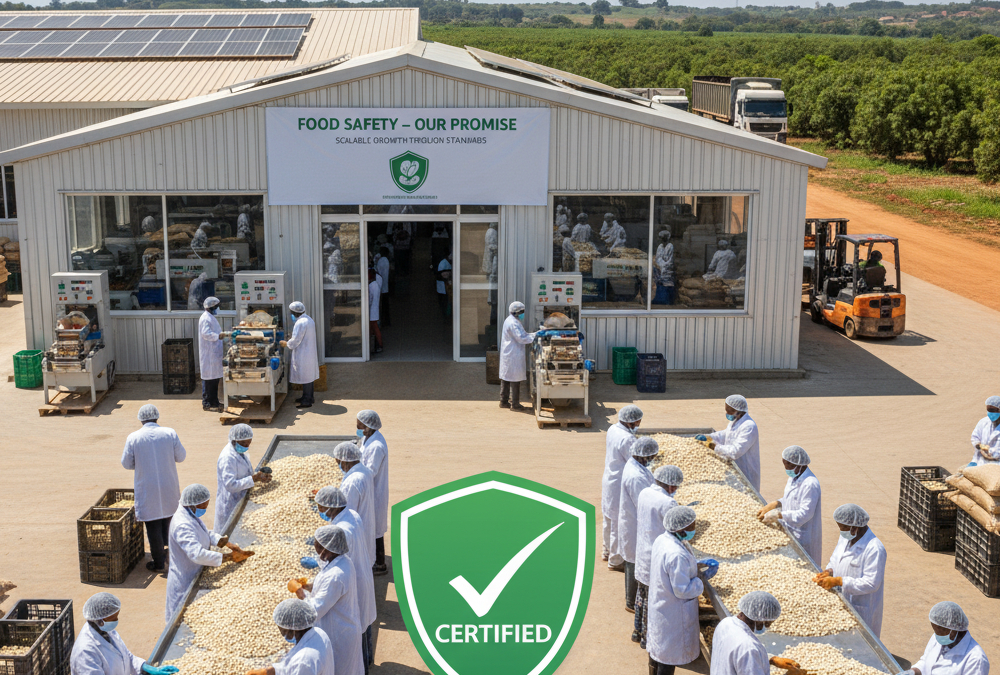

By Curtis Akunfu
When we launched our first cashew shelling plant in Ghana a few years ago, we were fueled by ambition, pride, and a laser focus on getting operations off the ground. Like many agro-processing entrepreneurs, we believed certifications – those seemingly bureaucratic checkboxes – could wait.
“We will figure it out later,” we told ourselves.
That mindset cost us dearly.
Within weeks of our facility opening, inspectors began flagging critical non-compliances: non-food-grade materials, wall finishes that failed hygiene standards, and a layout that violated Hazard Analysis and Critical Control Points (HACCP) protocols. The verdict?
Tear it down. Rebuild. Recalibrate.
Thousands of dollars vanished. Weeks turned into months of rework. And all of it – every setback – was entirely preventable.
The Hard Truth About Certification Costs
Here is what we learned the hard way: Certification isn’t expensive. Building without certification in mind is.
Too many agro-processors fall into the same trap. They design facilities based on immediate operational needs or budget constraints, treating certification as an afterthought – a costly hurdle to clear only when export opportunities arise.
But by then, it’s often too late. Retrofitting a non-compliant plant isn’t just inefficient – it’s financially devastating.
The smarter, more sustainable path? Embed certification requirements into your blueprint from day one.
Design with Standards, Not After Them
When you integrate global food safety and quality standards – like Good Manufacturing Practices (GMP), HACCP, ISO 22000, BRCGS, Fairtrade, EU Organic, and SMETA – into your initial facility design, you don’t just avoid costly mistakes. You unlock strategic advantages:
- Faster market entry: Buyers in Europe, North America, and beyond require proof of compliance before even considering your product.
- Lower long-term costs: Building right the first time eliminates expensive retrofits and production delays.
- Enhanced brand credibility: Certifications signal professionalism, traceability, and commitment to quality – key differentiators in competitive global markets.
Today, as demand for our cashew products surges, we are scaling up again – but with a fundamentally different approach. We are constructing a centralized finishing facility in Ghana that will aggregate output from our network of decentralized shelling units.
And from the very first architectural sketch, this facility is being engineered to meet the highest international benchmarks.
Building for Access, Not Just Output
This isn’t just about processing cashews more efficiently. It’s about building access – to premium buyers, export corridors, and supermarket shelves in markets where compliance is non-negotiable.
For African agro-processors eyeing global growth, the lesson is clear: Certification isn’t a barrier. It’s your blueprint for scalability, credibility, and competitiveness.
So don’t build first and certify later. Certify smart. Build ready. Save money. Move faster.
Curtis Akunfu is the Managing Director of Duapa Agri, a vertically integrated agribusiness operating across West and East Africa. With nearly 20 years of leadership in Africa’s agri-commodities sector, he also serves as a Global Council Member and Chair of the Agricultural Finance and Investment Working Group at the World Agriculture Forum.
