
Opinion
Why Nigeria had good reasons to delay signing onto the AfCFTA
By Olabisi D. Akinkugbe
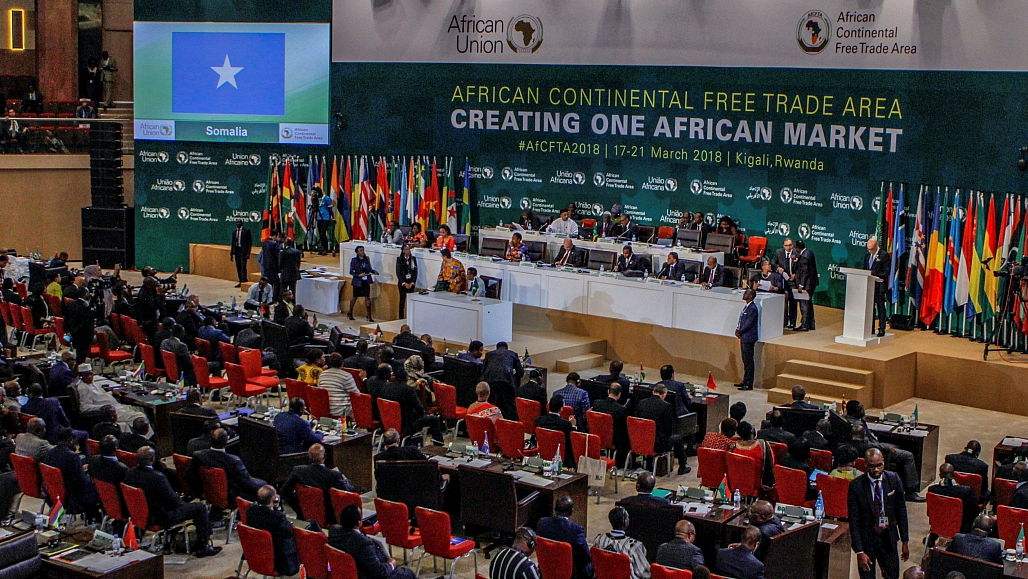
Much has been made of the embarrassing withdrawal by Nigeria from signing the African Continental Free Trade Agreement (AfCFTA) earlier this year having initially made the commitment to sign it.
But, Nigeria’s decision needs to be evaluated in the light of the reason it’s given for the delay. The government has subsequently explained that it’s decision wasn’t a rejection of the trade accord. Rather, it said, it wanted time to consult with key stakeholders in the country. This includes the Nigerian labor congress, the manufacturers association as well as other players in the private sector.
Given the free trade area’s potential to reconfigure intra-African market and the continent’s relationship with global trading system, consulting Nigerians should play an important role in signing the agreement.
The agreement is the first of its kind in Africa. It proposes creating a single market for goods and services, with free movement of people and investments across 55 countries. The agreement has a dispute settlement mechanism similar to the one set up by the World Trade Organization (WTO).
The deal promises to re-define trade relations among African states and beyond. It is also expected to aid the coordination of trade liberalization and improve interactions within existing regional economic communities.
If implemented, it will draw together the largest number of countries within a free trade area in the world. Initially 44 countries signed the pact in March. The number has since risen to 49.
In my view, the Nigerian federal government made a wise decision. Holding off on signing the agreement shows how seriously it’s taking the agreement.
The consultative process
The government is taking the consultations seriously. This bodes well for the future implementation of the agreement.
For example, in May, 6 consultation meetings were held in the 6 geopolitical zones – North-West, North-East, North-Central, South-East, South-South, South-West – of Nigeria.
The government has also consulted with think tanks as well as trade expert groups and institutions such as the Nigeria Institute for Advanced Legal Studies. It has also set up sessions with civil society. The process has also involved engaging with the Manufacturers Association of Nigeria, poultry groups, the Nigerian Labour Congress, Rice Processors Group, Aviation Association Group, Fertilisers Producers Association of Nigeria, the Nigerian Association of Small and medium Enterprises and the National Chamber of Commerce, industry, mines and agriculture.
Nigeria’s Chief Trade Negotiator and Director General, Nigerian Office for Trade Negotiations, Ambassador Chiedu Osakwe, recently stated that Nigeria is finally getting ready to sign
While buy-in from everyone might not be achieved, the engagements are nevertheless important.
More to gain than lose
The Buhari administration has made it clear that it sees great merit in the free trade agreement. It has applauded the agreement’s potential to expand market access for Nigeria’s good and services. And that it will boost economic growth and job creation. The agreement will also improve competitiveness and the ease of doing business in Nigeria while it simultaneously provides a platform for the country’s continued leadership role in Africa.
For Nigeria, the agreement’s dispute settlement mechanism would also be a major advance, providing protection against hostile and discriminatory trade practices.
But it does have concerns. These include unfair trade practices, such as dumping – when a country lowers the sales of its exports below the cost of production to gain unfair market share. A rules based trade governance structure would give Nigeria greater access to invoking remedies for this kind of behavior.
The federal government has expressly declared its confidence in the potential of the agreement’s dispute settlement mechanism. This contrasts with its scepticism of WTO’s dispute settlement mechanism which developing countries have generally viewed as expensive and unfair towards them. Perhaps, one way to explain the embrace of the dispute settlement mechanism under the agreement then is its uniquely African roots and the potential for “equal” access among its members.
For Africa: More Free Trade and less protectionism is the way
It is only fair that the federal government is allowed time to examine issues like this closely. But, it is also important that Nigeria doesn’t allow the consultation to cripple, jeopardize or undermine the process.
Not signing the free trade agreement is not an option for Nigeria, particularly given the rise in protectionism, nationalism and backlash against free trade in the global multilateral trading system.
Past experiences with economic integration on the continent are not that encouraging. Nevertheless, the free trade pact offers African states the opportunity to build a formidable market in these unsettling global economic times.
Olabisi D. Akinkugbe, Dalhousie is an Assistant Professor at the Schulich School of Law, Dalhousie University, Halifax, Canada. The original version of this article was published in The Conversation.
