
Business
Trinidad & Tobago to lend expertise to help Ghana develop oil and gas infrastructure
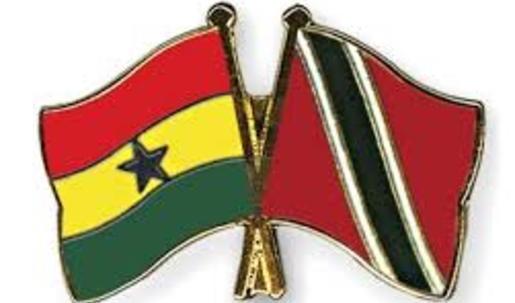
Technical personnel from Trinidad & Tobago’s energy sector are in Ghana today to explore ways in which the Caribbean country can collaborate with the west African country to develop its oil and gas infrastructure.
The visit will mark the resuscitation of partnership discussions which started between 2009 but stalled because of changes in leadership in both countries.
The Honorary Consular of Trinidad & Tobago, John Mitchel, speaking to reporters, said the technical team, made up of personnel of the Trinidad & Tobago national gas company and its national energy authority, are meeting with the Ghanaian counterparts, as well as the Minister of Energy and Petroleum, to outline their objectives, and lend their experience going forward.
Areas earmarked for discussion include adding value to Ghana’s gas resource and the expansion of the newly commissioned Atuabo Gas Plant in western Ghana, such as its extension to improve the flow of gas to the Eastern corridor to help stabilize and fairly distribute power generation across the country.
Trinidad & Tobago has been producing oil for more than 100 years. However, in the 1970s it started adding value to its associated gas to produce ammonia and methanol for industrial and commercial use. Its gas processing sector is almost fully manned by local hands, as it developed a local content law which enabled its citizens to master their art and take over the reins of the industry.
The twin-island Caribbean nation, which supplies 60 percent of America’s Liquefied Natural Gas (LNG) and the world’s largest producer of ammonia and methanol, offered to partner Ghana to add value to its gas resource, shortly after Ghana discovery of oil in commercial quantities in 2007. Subsequently, it assisted Ghana with technical expertise to develop the local content and local participation in Petroleum Activities Regulation which is currently in place.
Trinidad & Tobago was to enter into partnership with Ghana’s energy authorities to develop a gas infrastructure that was to be in place ahead of the first flow of oil, but the discussions stalled when leadership changed in that country in 2010. Ghana, therefore, had to look for new partners and settled on China. That notwithstanding, discussions have been ongoing between Ghana and Trinidad & Tobago since 2010.
With prices hovering around US$100 and US$120 per barrel of oil when Ghana discovered oil in 2007, prices have been falling in recent times to the current US$30 a barrel as of last week, with predictions it may drop further to US$20 a barrel.
With such uncertainties and a large chunk of the oil resource controlled by foreign companies, Ghana’s sure bet is to develop its gas infrastructure and position itself as a petrochemical hub of Africa.
