
Opinion
The Bribe Is the Tariff: How Border Corruption is Undermining the AfCFTA
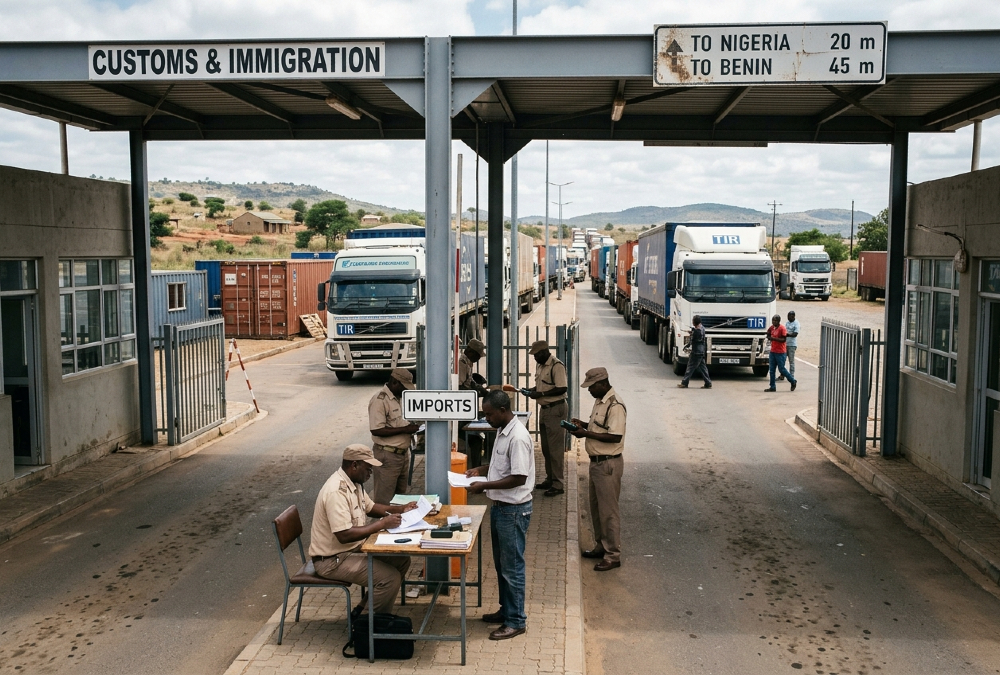
Despite the historic AfCFTA agreement, intra-African trade remains stifled by border corruption and logistical bottlenecks.

By Wilbert Chaniwa
Africa signed the world’s largest free-trade agreement and then left the toll booths standing.
On paper, tariffs across the continent are falling. At the border, a second tariff is still being collected. It is set by no parliament, appears in no schedule and is paid in cash, in hours and in signatures. The African Continental Free Trade Area (AfCFTA) has not yet touched it.
The scale of the problem shows in the numbers. By the estimates cited here, exporters in sub-Saharan Africa spend about 196 hours and roughly US$813 getting goods across a border. In the OECD, the same exercise takes 15 hours and US$186. Perhaps unsurprisingly, Africans trade little with one another. Intra-African trade makes up just 14.4 percent of the continent’s formal trade, compared with about 60 percent in Europe and more than 40 percent in Asia.
Three crossings show why.
Beitbridge: The R300 Shortcut
On the border between South Africa and Zimbabwe, a delayed truck can cost upwards of US$400 a day. Border delays cost South Africa’s economy as much as 16 billion rand (US$880m or so at recent rates) a year. During one particularly bad stretch, a “facilitation fee” of 300 rand was enough to buy a place at the front of the queue.
Kasumbalesa: The Queue that kills
On the frontier between Zambia and the Democratic Republic of Congo, lines of trucks have stretched up to 70 kilometers (43 miles), and crossings have taken up to eight days. Idle drivers are charged extra for delays that the system itself created. One died of malaria while waiting in line.
Lagos: A Gate at Every Signature
Nigeria’s ports are estimated to lose US$19 billion a year, about 5 percent of GDP, to delays, illegal charges and insecurity. Clearing a single cargo can require between 79 and 100 signatures. Every signature is a gate, and every gate has a price.
Not Grease, But a Tax
Economists like to describe petty corruption as grease that keeps rusty machinery turning. The evidence says otherwise. Research on the ports of Maputo and Durban found that bribes can add as much as 14 percent to total shipping costs. That is not lubrication. It is a tax, and one that is regressive, unpredictable and collected by the wrong people.
The uncomfortable truth is that border dysfunction persists because too many people profit from the queue. Some businesses, meanwhile, pay to skip it. In doing so they finance the very line their competitors are stuck in, and they gain a private advantage at the expense of a public good.
The Queue Can Be Shortened
It is not inevitable. At Busia, on the Kenya-Uganda border, a One Stop Border Post cut average crossing times by 84 percent. The technology was not exotic. What worked was joining up agencies, so that a truck is processed once rather than twice.
Governments that are serious about AfCFTA should do five things:
- Remove discretion. Every decision an official can make at his own pleasure is a decision he can sell.
- Digitize clearance. Paper creates chokepoints, and chokepoints create rents.
- Cut the signatures. If 79 approvals are needed, at least 60 of them are probably unnecessary.
- Publish wait times. Sunlight is cheap, and data on delays tells traders where to look and officials where to worry.
- Prosecute both sides. The official who demands a bribe and the firm that pays it are partners in the same offense.
Above all, governments should change the scorecard. Success under AfCFTA should be measured in hours-to-cross, not in treaties signed.
What Agribusiness Should Do
For farmers and food processors, the lesson is blunt: your margin is set at the border, not on the farm. A firm that grows a flawless crop and then loses a week at the frontier has lost its profit to spoilage and fees. Agribusinesses should:
- Price corridor risk honestly, rather than pretending the border does not exist.
- Refuse collectively. A bribe-payer who acts alone is a victim, but a bribe-payer who acts with others can become a bloc.
- Invest in compliance and trusted-trader status, which turns clean paperwork into a faster lane.
- Choose corridors by integrity, not only by distance.
- Add value before the crossing. Processed goods tolerate delay better than fresh ones.
The Real Question
Africa does not have a trade problem. It has a border problem dressed up as a trade problem.
The question is whether those who profit from the queue are more powerful than those who suffer in it. The answer will determine whether AfCFTA becomes the engine of a continental market or merely the world’s largest agreement on paper.
Wilbert Chaniwa is an entrepreneur, corporate consultant, and author specializing in African agribusiness, investment advisory, and agri-food value chains. He is the Founder and CEO of RIC Brands, a UK–Africa agribusiness and hospitality company operating in the United Kingdom and Rwanda. His work focuses on food and soil sovereignty, reducing import dependency, restoring soil health, and scaling domestic food production. He also advances indigenous crop commercialization – such as fonio, moringa, baobab, teff, and bambara groundnut – while promoting knowledge transfer, market access, and agri-CPG trade across Africa.
