
News
Obama and other G-8 leaders focus on eurozone crisis
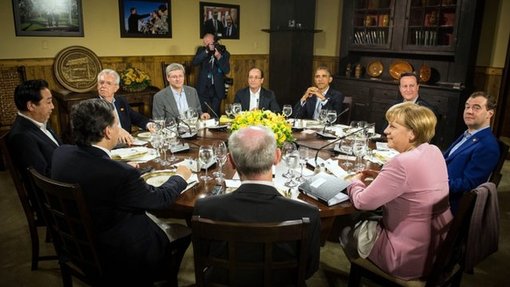
The two leaders, Obama said “agree that this is an issue of extraordinary importance not only to the people of Europe but also to the world economy.”
In a hint of the pressures facing the leaders, when Obama greeted Merkel and asked her how she was doing, the German leader only shrugged.
“Well, you have a few things on your mind,” Obama said.
A central economic topic, though hardly the only one confronting Europe, is the fate of Greece. That country is facing the most acute financial crisis of the eurozone and is set to hold elections June 17 to end political deadlock. At issue is whether Greece abandons the euro to escape austerity measures.
Hollande, after meeting with Obama at the White House, said, “We share the same views, the fact that Greece must stay in the eurozone and that all of us must do what we can to that effect.”
For Obama, Europe’s fate is critical to his own political survival. An economic recession that spreads to the U.S. could damage an already slow recovery and boost the argument by his Republican challenger, Mitt Romney, that the United States economy needs new leadership.
There is a get-acquainted aspect to the session as well.
The Camp David gathering, the largest collection of foreign leaders ever at the presidential retreat, is the first G-8 meeting for Hollande, for Italian Prime Minister Mario Monti and for Japanese Prime Minister Yoshihiko Noda. In what has been widely viewed as a snub, Russian President Vladimir Putin is skipping the G-8. He sent Prime Minister Dmitry Medvedev in his place.
Copyright 2012 The Associated Press
