
Life
Nigerian literary giant, Chinua Achebe dies at 82
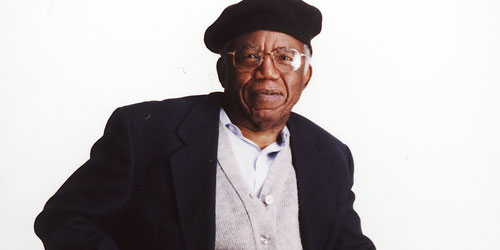
His novel was nearly lost before ever seen by the public. When Achebe finished his manuscript, he sent it to a London typing service, which misplaced the package and left it lying in an office for months. The proposed book was received coolly by London publishers, who doubted the appeal of fiction from Africa. Finally, an educational adviser at Heinemann who had recently travelled to west Africa had a look and declared: “This is the best novel I have read since the war.”
The opening sentence was as simple, declarative and revolutionary as a line out of Hemingway: “Okonkwo was well known throughout the nine villages and even beyond.” Africans, Achebe had announced, had their own history, their own celebrities and reputations. In mockery of all the Western books about Africa, Achebe ended with a colonial official observing Okonkwo’s fate and imagining the book he will write: “The Pacification of the Primitive Tribes of the Lower Niger.” Achebe’s novel was the opening of a long argument on his country’s behalf.
“Literature is always badly served when an author’s artistic insight yields to stereotype and malice,” Achebe said during a 1998 lecture at Harvard University that cited Joyce Cary’s “Mister Johnson” as a special offender. “And it becomes doubly offensive when such a work is arrogantly proffered to you as your story. Some people may wonder if, perhaps, we were not too touchy, if we were not over sensitive. We really were not.”
Achebe could be just as critical of his own country. The novels A Man of the People and No Longer at Ease were stories of corruption and collapse that anticipated the Nigerian civil war of 1967-70 and the years of mismanagement that followed. He not only supported Biafra’s independence, but was a government envoy and a member of a committee that was to write up the new and short-lived country’s constitution. He would flee from Nigeria and return many times and in 2004 refused the country’s second-highest award, the Commander of the Order of the Federal Republic.
Besides his own writing, Achebe served for years as editor of Heinemann’s “African Writer Series,” which published works by South African civil rights activists including Nadine Gordimer, Stephen Biko and others. He also edited numerous anthologies of African stories, poems and essays. In There Was a Country, he considered the role of the modern African writer.
“What I can say is that it was clear to many of us that an indigenous African literary renaissance was overdue,” he wrote. “A major objective was to challenge stereotypes, myths, and the image of ourselves and our continent, and to recast them through stories — prose, poetry, essays, and books for our children. That was my overall goal.”
Copyright 2013 The Associated Press
