
Life
Natasha Trethewey named 19th US poet laureate
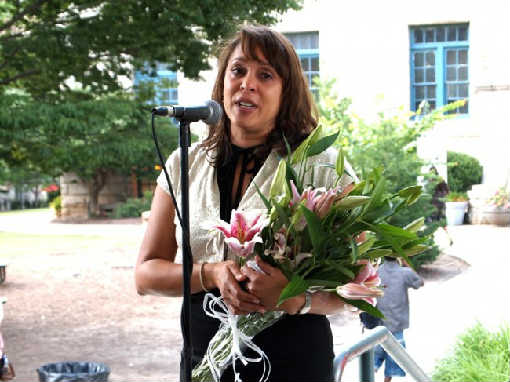
Librarian of Congress James Billington, who chose Trethewey after hearing her read at the National Book Festival in Washington, said her work explores forgotten history and the many human tragedies of the Civil War.
“She’s taking us into history that was never written,” he told the AP. “She takes the greatest human tragedy in American history, the Civil War, 650,000 people killed, the most destructive war of human life for a century, and she takes us inside without preaching.”
It’s a “happy coincidence,” he said, that Trethewey was chosen during the 150th anniversary of the War Between the States. Billington said he was impressed with her skill in translating a visual image into words and moving from rhyme to free verse, but always keeping her poems accessible.
Trethewey will be the first poet laureate to take up residence in Washington in January 2013 and work directly in the library’s Poetry Room since the position was created in federal law. Her term, beginning in September, also coincides with the 75th anniversary of the poetry center and a poet-consultant position at the world’s largest library.
The poet historian will be among the youngest laureates and said she hopes to promote national activity around the writings and to engage with the library and people who visit it in the nation’s capital. She has a personal connection to its vast holdings after researching her Civil War poetry in the library’s records.
Past poet laureates have included W.S. Merwin, Kay Ryan, Stanley Kunitz, Robert Pinsky, Rita Dove and Warren – the southern native who was an inspiration for Trethewey. Their agendas as the nation’s chief poets have included readings across the country, newspaper syndication of poems and poetry readings over high school public address systems.
Poetry lives in the Trethewey family. Her father, Eric Trethewey, is a poet and college professor. But when she went to graduate school, she was more interested in telling stories and studied fiction writing.
“On a dare that first semester, a poet friend of mine got me to write a poem. I did it because I thought I would prove that I couldn’t do it,” she said. “It was at that moment that something really clicked.”
Her Pulitzer-winning poems also included her personal history as the daughter of interracial parents – and the story of her mother, who died at the age of 40. In “Miscegenation,” a poem in “Native Guard,” she wrote about her parents’ journey to Ohio in 1965 for a marriage that was illegal at home in Mississippi.
