
Business
Inconvenient facts that need to be addressed for Africa’s Telecoms Sector to continue growth
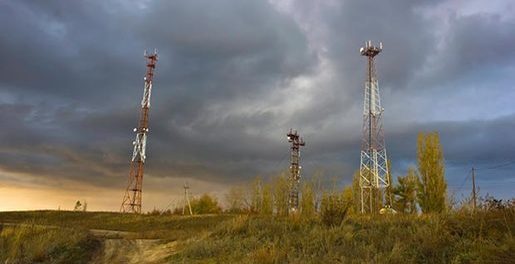
Africa’s telecoms and internet sectors have made enormous progress over the last 10 years and many barriers to the expansion of the business have come down. However, there are still a number of inconvenient facts that stand in the way of the business continuing to grow and attract new investment.
Africa’s telecoms and internet industry has two kinds of problems: those that can be changed reasonably easily and those that are much more difficult to change (power supply, geography, etc). The list below seeks to identify a short list of things that can and should be relatively easy to change.
Inconvenient Fact No 1: International wholesale fiber bandwidth prices in over 20 African countries are 4-5 times the price that they are in Africa’s more competitive markets like Ghana, Kenya, Nigeria and Uganda. These same countries also have some of the highest national fiber prices because many still have a monopoly telecoms operator as the cornerstone of their market.
With certain exceptions, satellite bandwidth in these countries tends to be quite expensive to deliver reasonably priced services to remote areas. The price is set by the oil and mining industries and they have the kind of deep pockets that rural Africans do not.
Bandwidth is the fuel of the Internet economy and any African government that says it wants an “information society” and does nothing about the level of these prices is not serious about creating wealth and global access for its citizens.
Inconvenient Fact No 2: Even in some of the most competitive African countries, it still costs more to go from the coast, inland than it does to go from the coast to London. For example, in Nigeria, although prices have fallen from thousands of dollars per mbps on these routes (Lagos-London, Lagos-Abuja) to hundreds, the Lagos-Abuja route is still more expensive than the much longer Lagos-London route.
Prices in all parts of the network need to fall and the “rent-seeking” rates of dominant players (like MTN in the Nigerian context) need to end. Africa’s data future needs an increasing number of data customers on the new cheap smartphones.
Inconvenient Fact No 3: Whether it is revenue shares on SMS (text messaging) or the share taken on operator billing, Africa’s mobile operators always seem to assume that they take the lion’s share of revenues in any value chain.
Recently Skrill together with Microsoft have been working on providing a billing system with mobile operators where between them they only take 20 percent, leaving the rest to the content or service provider. One mobile operator has been giving an Internet start-up it has invested in a 0 percent deal and privately acknowledges once it has started to succeed that the figure will be more like 7-10 percent.
Mobile operators need to understand the future and start creating the conditions for e-payment as quickly as possibly.
