
Business
How much can ‘Buy Black’ shopping lift Black-owned businesses?
Oprah Winfrey joins efforts to promote such entrepreneurs, but economists cite limits in addressing economic inequality through shopping
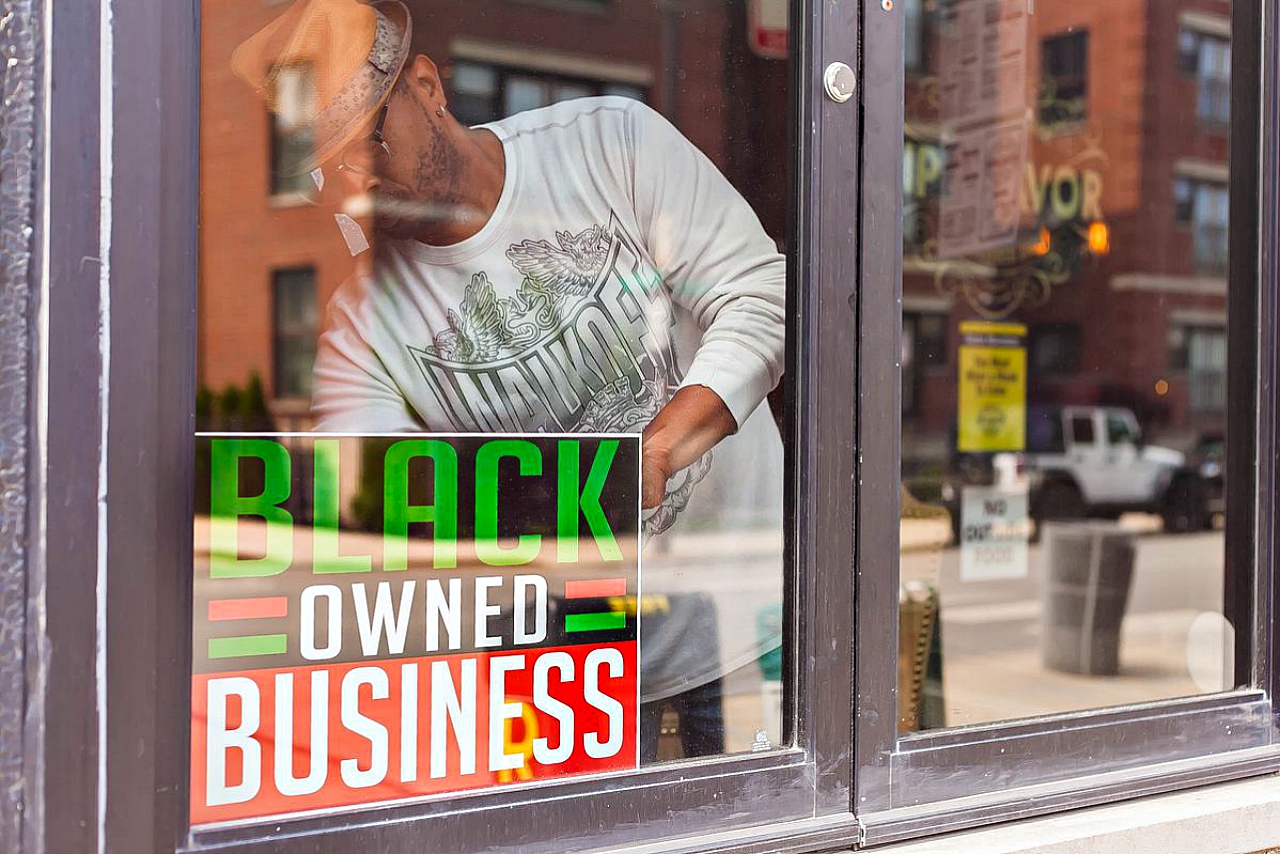
Some Americans looking to send a message with their holiday-shopping dollars are heeding a call that has resurged in popularity since the summer: Buy Black.
Companies including Facebook Inc., and celebrities such as rapper and entrepreneur Sean “Diddy” Combs are urging shoppers to spend at Black-owned businesses. Oprah Winfrey’s powerful “Favorite Things” list, which has earned a reputation for boosting the sales of featured products, included mostly Black-owned or Black-led brands for the first time this year.
Yet consumer-driven efforts can only do so much when it comes to leveling the playing field for Black-owned small businesses or addressing economic inequality, economists and business owners say.
“Me spending money is critical,” said Raegan Mathis, a Washington, D.C.-based project manager and artist who recently bought a T-shirt from Harriett’s Bookshop, a Black-owned merchant in Philadelphia. “But being able to make a business sustainable and being able to help enough people do that to where you can build an economy, that is the key.”
The Buy-Black movement, which originated before the Civil War, have gotten wide attention this year amid a national conversation about racial inequities following George Floyd’s killing at the hands of Minneapolis police and the COVID-19 pandemic’s disproportionate toll on Black communities.
“Buying Black is, in effect, a statement of survival on the part of the African American community,” said Molefi Kete Asante, a historian and chair of the Africology and African American studies department at Temple University. “I don’t think that any African American person seriously believes that buying Black will erase the wealth gap between white people and Black people.”
Business soared during the summer at Harriett’s Bookshop, where owner Jeannine Cook said orders for titles by Black authors like Ijeoma Oluo and Brit Bennett rose faster than she and her team of 3 part-time volunteers, all high-schoolers, could keep up with.
“It has felt like a tsunami at times,” she said. By the end of July, Cook said, the demand had subsided.
Data from Yelp Inc., show that searches containing the words “Black owned” have declined each month since spiking in June, although such searches remain above 2019 levels, said a spokeswoman for the business reviews website. Searches for Black-owned firms on Google show a similar trend line, according to Google Trends.
Black-owned small businesses closed at higher rates than other businesses early in the pandemic, according to Census Bureau data. Some 44 percent of 419 minority-owned small businesses that responded to an October poll by Alignable, a small business social-networking firm, said they didn’t have enough on hand to cover November rent.
Many of those firms have also struggled to access emergency capital, research suggests. Harriett’s Bookshop received a US$2,000 grant through a Philadelphia COVID relief fund for small businesses, which covered one month’s rent, Cook said. She said her business didn’t qualify for the Paycheck Protection Program, and has received no other government funding.
Mathis, 45 years old, said her family instilled in her the importance of supporting Black-owned businesses. “I’m Black and so I want to see us do well,” said Mathis. Yet, she added, consumer behavior is just one part of addressing the structural challenges Black-owned businesses face.
Sheri Pavelich, of Cortez, Colorado, ordered 2 books from Harriett’s after becoming aware of the store and Buy Black efforts through the Twitter feed of author Jason Reynolds.
“I hadn’t thought of buying Black as a thing. I was just looking to support a business that could use it,” said Pavelich, who is white.
“It’s an interesting perspective to have now, so I think that’s going to further inform my future decisions.”
Jeffrey Humphreys, director of economic forecasting at the University of Georgia’s Terry College of Business, said Buy Black campaigns could have a broad impact on the economy if they gain traction both within and outside the Black community, because consumer spending is a key driver of economic growth.
Personal-consumption expenditures account for more than two-thirds of U.S. gross domestic product (GDP). In the third quarter, a rebound in consumer spending helped the U.S. economy recover ground lost during the deep downturn brought on by the COVID-19 pandemic.
Jared Ball, professor of communication studies at Morgan State University, said estimates of African American buying power are often cited to argue that the Black community has untapped economic potential.
The idea is “that if Black people used their buying power differently, they could do something differently with their economic condition,” said Ball, who wrote the book “The Myth and Propaganda of Black Buying Power.”
Ball said while he supports Buy Black campaigns and other collective efforts to support Black institutions, such action has little impact on issues such as Black businesses’ ability to access financing or the racial wealth gap.
Although the median wealth of Black households has grown at a faster pace than white households in recent years, the net worth of white families is still nearly 8 times that of Black families, according to Federal Reserve data.
“All of this messaging around buying power and Black capitalism and entrepreneurship is ultimately a distraction from the reality that it’s public policy that needs to be dealt with and addressed,” Ball said.
Matthew Goins, owner of Puzzle Huddle, said he was grateful to be included on Oprah’s list, and is currently receiving more than 100 orders a day for puzzles – a logistical challenge since he runs his fulfillment operation out of his home in Washington, D.C.
“Storage space for the holidays has become the basement, living room, dining room and kitchen,” he said. “My family has to live above and around all the boxes.”
He said he is working hard to turn those shoppers into loyal customers. That task is tougher, because some people are buying through Amazon.com Inc., which sponsored Winfrey’s list.
Amazon doesn’t share email addresses that direct-to-consumer businesses like Puzzle Huddle rely upon to market products, Goins said. “Amazon is wonderful, but there are pros and cons to when you sell a product to a person on Amazon,” he said. “That’s Amazon’s customer.”
An Amazon spokesperson said the company supports minority-owned businesses and that sellers on its platform have access to customer data and insights.
Adam Glassman, creative director at O, The Oprah Magazine, which publishes Ms. Winfrey’s list, said supporting small businesses, including Black-owned ones, has long been a priority of the publication.
The Wall Street Journal © Copyright 2020
