
Life
Haiti: Despite mounting evidence UN still not willing to take responsibility for Cholera
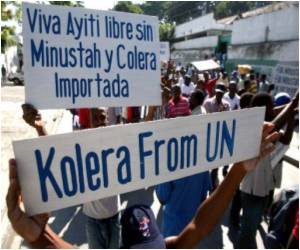
The United Nations (UN) has refused, again, to countenance the claims of 5,000 cholera-affected Haitians against it.
The Haitians contend that grossly inadequate sanitation at a UN peacekeeping base introduced and spread the disease through the country’s waterways. The great weight of scientific evidence is on their side. The claimants seek millions of dollars in damages, installation of a sanitation network, and an apology.
UN secretary-general, Ban Ki Moon, reiterated that the UN’s legal office has decided the claims are “not receivable” because of the UN’s privileges and immunities.
The UN has offered little insight into its reasoning, except that consideration of the claims would involve a review of “political and policy matters”. That statement has only raised more questions, including whether “dumping disease-laden waste water in rivers is UN policy,” as a reporter asked at a press briefing last week.
Critics argue that the UN’s stance is tantamount to claiming impunity—that the UN, an organization whose mission involves promoting the rule of law, is putting itself above it. The Haitians’ lawyers now plan to sue the UN in court. If a court decides to hear the claims, the case could have far-reaching implications for peacekeeping practices around the world.
The disease was not documented in Haiti until October 2010. Since then, many scientific studies have provided strong support for the hypothesis that Haiti’s cholera strain came from Nepal. (The latest is a DNA sequencing study, published in July, which traced Haiti’s cholera strain to Nepal.) A Nepali contingent of officers staffed the peacekeeping base at the time of the outbreak.
The cholera bacterium, meanwhile, has killed nearly 8,200 Haitians and made unwell close to 665,000, about 7 percent of the population. The UN has staunchly refused to entertain the cholera claims in any venue.
Read more: The Economist
