
Business
East African Crude Oil Pipeline 64.5% Complete, Generating $19.5M in Revenue for Tanzania
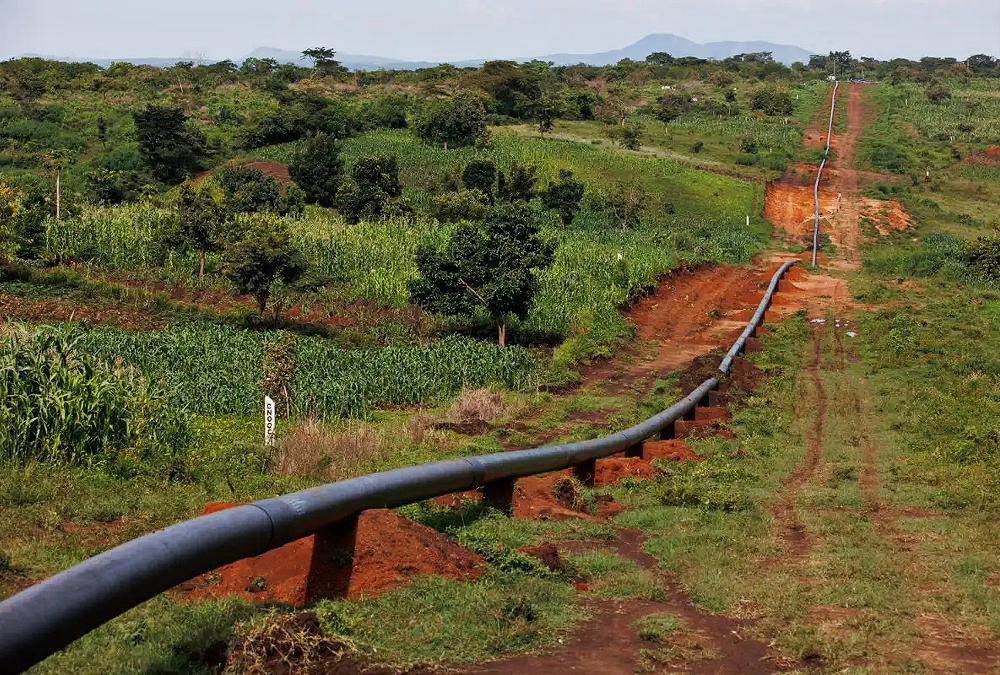
The East African Crude Oil Pipeline (EACOP), the world’s longest heated crude oil pipeline, is now 64.5 percent complete and has already generated approximately US$19.5 million in tax revenue and levies for Tanzania, according to project officials.
Spanning 1,443 kilometers (897 miles) from Kabaale in Hoima District, western Uganda, to the Chongoleani Peninsula near Tanga Port in Tanzania, the EACOP is poised to become a transformative energy infrastructure project for East Africa. Once operational in 2027, it will transport Uganda’s waxy crude oil to international markets, marking a major milestone in regional integration and energy independence.
Construction began in 2023 on the US$5 billion cross-border venture, which is hailed as a cornerstone of East Africa’s long-term energy strategy. Project leaders say EACOP is on track to boost Foreign Direct Investment (FDI) in both Uganda and Tanzania by more than 60 percent during the construction phase, based on projections outlined in the official project factsheet.
Engineering Innovation for Safe, Efficient Transport
As the first heated crude oil pipeline of its kind on the continent, EACOP features embedded electrical heating filaments and fiber-optic cables along its entire length. These technologies ensure the safe and efficient flow of Uganda’s high-wax-content crude, which can solidify at ambient temperatures if not properly managed.
The integrated fiber-optic network enables real-time satellite monitoring and advanced leak detection, significantly reducing environmental risks and enhancing operational safety. This cutting-edge system positions EACOP among the most technologically advanced pipelines globally.
Dual Economic Impact: Export and Domestic Refining
Beyond export capabilities, the project includes a domestic refinery in Hoima, Uganda, designed to process a portion of the country’s crude output for local consumption. This dual approach – exporting refined and unrefined oil – aims to strengthen energy security while integrating East Africa into global energy supply chains.
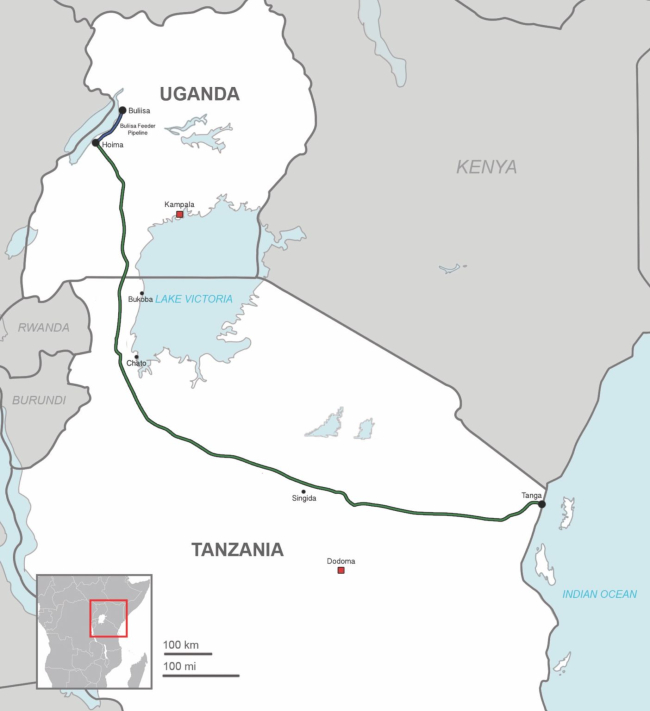
Map illustrating the route of the East African Crude Oil Pipeline (EACOP), also known as the Uganda–Tanzania Crude Oil Pipeline
Crude transported via EACOP will be loaded onto tankers at a specially constructed terminal on Tanzania’s Indian Ocean coast, opening direct access to international markets.
Strategic Partnership Driving Regional Growth
EACOP is a joint venture led by TotalEnergies (62 percent), in partnership with the Uganda National Oil Company (UNOC, 15 percent), Tanzania Petroleum Development Corporation (TPDC, 15 percent), and China National Offshore Oil Corporation (CNOOC, 8 percent). The collaboration underscores growing international confidence in East Africa’s energy potential.
The pipeline is expected to carry up to 216,000 barrels per day, unlocking billions in export revenue over its projected 25-year lifespan. Officials emphasize that the project will create thousands of jobs, stimulate local industries, and catalyze broader economic development across the region.
Looking Ahead to 2027
With construction progressing steadily, stakeholders remain committed to meeting the 2027 target for first oil exports. Environmental and social safeguards continue to be monitored closely, amid ongoing dialogue with civil society groups and regulatory bodies.
As one of Africa’s most ambitious energy projects, EACOP represents more than infrastructure – it symbolizes a new era of regional cooperation, technological advancement, and sustainable economic transformation in East Africa.
