
Business
Dangote Refinery taking shape – First phase to be completed by this year’s end
Nigeria – the largest crude oil producer and exporter in Africa – still imports more than 80 percent of its petroleum products needs.
The completion of the US$11 billion Dangote Refinery in 2019 will eliminate the importation of refined petroleum products by the country – amounting to a US$7 billion cost savings.
The Dangote Refinery will produce 650,000 barrels per day (bpd) of refined petroleum products to meet all the country’s refined petroleum products needs as well as export to other countries.
Nigeria spent N2.59 trillion (US$7.22 billion) to import refined petroleum products in 2016, according to the Nigeria Bureau of Statistics.
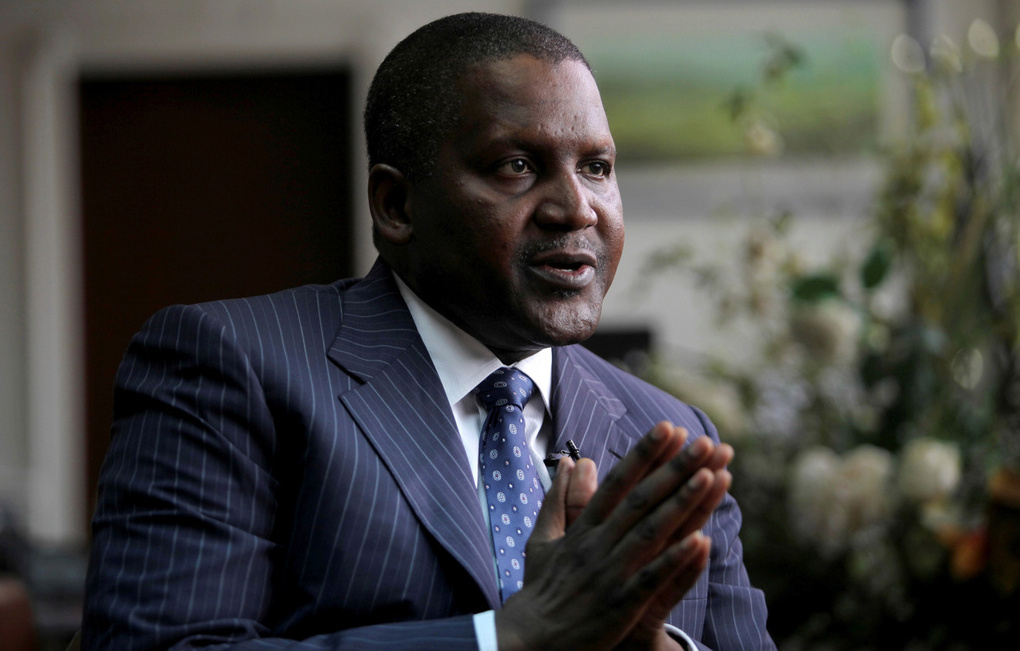
Founder and chairman of the Dangote Group, Aliko Dangote, said that the refinery project was primarily meant to diversify the resource base of Nigeria.
“Our refinery will be 1.5 times the capacity of all the existing 4 refineries in the country even if they are working at 100 percent capacity. This is the single largest refinery in the world.” Dangote added.
Nigeria’s Vice President Yemi Osinbajo described the project as an incredible industrial undertaking, the largest and most ambitious on the continent.
Integrated Petro-chemical complex
The Dangote Refinery is an integrated petro-chemical complex. Apart from refining crude oil to petroleum products, it will also have petrochemical and fertilizer plants.
The fertilizer plant will produce 2.8 million metric tonnes of assorted fertilizers; while the gas plant will produce 3 million cubic meters of gas per annum. The refinery will also have the largest sub-sea pipeline infrastructure in the world with capacity to handle 3 billion cubic meters of oil annually.
The project is located in Lekki Free Trade Zone, in the state of Lagos. According to Dangote Group officials, the first phase of the plant is set to be completed by the end of 2017, while the second phase by the end of 2018, while the third and the commencement of the refinery will be in 2019.
Nigeria has often experienced fuel shortages due to the poor state of its state-owned refineries.
All the 3 refineries, operated by the federally-owned Nigerian National Petroleum Corporation (NNPC), are producing far below their installed capacity.
Largest in Africa
The Dangote Refinery will be the largest in Africa surpassing South Africa’s Sapref Refinery that produces 180,000 bpd and Eygpt’s Mostorod Refinery with a capacity of 142,000 bpd.
Dangote has already provided US$7 billion in equity out the US$14 billion estimated total cost of the project. Some Nigerian banks provided a syndicated loan of US$3.3 billion while the African Export-Import Bank (Afreximbank) has also pledged to access capital funding for the project.
Benefits
The resultant benefits of the Dangote Refinery to Nigeria are diverse.
According to Dangote, the project would save the country about US$7.5 billion per year, and in addition, generate US$5 billion per year from exports of refined petroleum products.
The plant, is estimated to create over 100,000 direct jobs, and revive over 11,000 filling stations that had been shut due to shortage of products. It is also projected that the price of petroleum products in country will likely reduce – a cost savings to Nigerians.
The projected success of the Dangote Refinery is an indication that the Nigerian private sector is ready, willing and able to handle large scale projects tat have been to a large extent the purview of the state and foreign multinational conglomerates.
The Dangote Group continuous to make tremendous and positive impact across the African continent.
