
Business
Dangote refinery key to Africa’s economic transformation
With a whopping gross domestic product (GDP) of US$1.8 trillion, countries in sub-Saharan Africa are on the cusp of economic transformation, with the imminent coming on-stream of the US$12 billion Dangote refinery and petrochemicals complex.
The region is expected to be the direct beneficiaries of the 650,000 barrels-per-day refinery as the project is expected to drastically reduce the countries’ fuel import majorly from Europe with expected impact on foreign exchange outflows.
These are part of the submissions by oil and gas stakeholders at this year’s Ghana International Petroleum Conference (GhIPCON) in Accra, Ghana themed ‘Regional Collaboration; A Catalyst for Transformation’, which was organized by the country’s Ministry of Energy and the National Petroleum Authority.
Sub-Saharan Africa presently boasts of over 132 trillion barrels of proven oil reserves, more than 8 percent of the world’s supply. Yet, it exports most of this oil to overseas refineries; which has for long denied the region of the huge opportunity for economic transformation.
The inability of sub-Saharan African countries to locally refine their oil has taken a huge toll on their economies, with 48.5 percent of the region’s population living below US$1.25 per day and life expectancy hovering at 56 years.
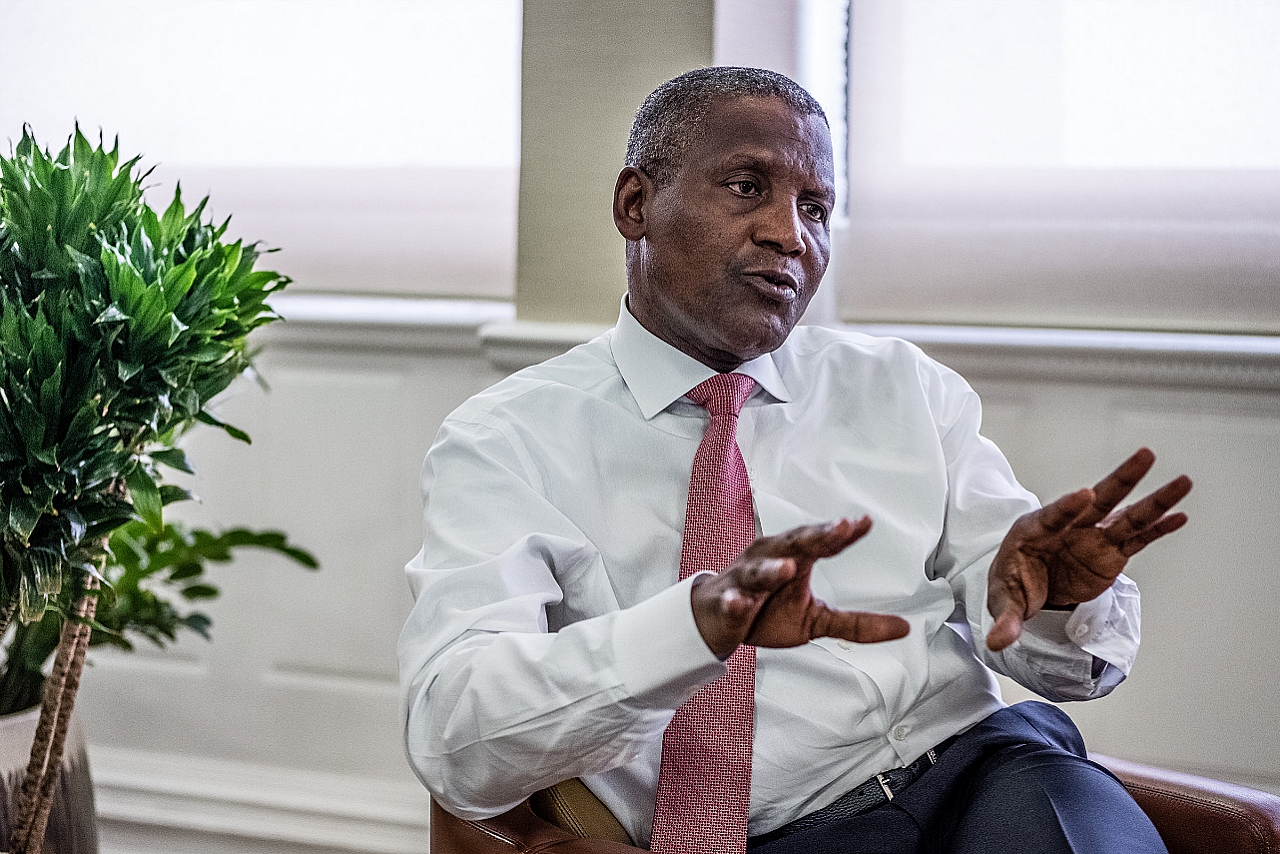
However, in this context, the African region, whose economic growth has combined national output equivalent to the GDP of Spain, would be a major beneficiary of the economic transformation arising from the operation of the largest single train refinery in the world – currently under construction in Ibeju-Lekki, Lagos city, Nigeria by Aliko Dangote.
Dangote Group Executive Director, Strategy, Capital Projects & Portfolio Development, Devakumar Edwin said at the conference that the refinery would soon come on stream to the benefit of the region whose economy had largely depended on imports from Europe and the west, and that the Dangote refinery will foster regional harmonization in the distribution of cleaner petroleum products in West Africa.
Edwin, expressed belief that the completion of Dangote Refinery and other modular refineries projects across West Africa, would lead to the integration of the downstream industries, and stabilize the prices of petroleum products across the African sub-region. He stressed the need for other investors in West Africa to emulate the investment drive of Aliko Dangote in the downstream petroleum sector and make the sub-region an exporter of refined products.
Edwin also urged investors to also invest in the downstream sector. “If Dangote can do it, any investor can do it. Dangote has not waited for government to regulate the downstream sector before starting the construction of the refinery. We don’t need foreign investors to turn around our downstream sector. African investors should be able to emulate Dangote and revive the African downstream petroleum industry,” he added.
He assured the stakeholders that the refinery is designed to process multiple grades of domestic and foreign crude, which can be converted into high-quality gasoline, diesel, kerosene, and aviation fuels that meet Euro V emissions specifications.
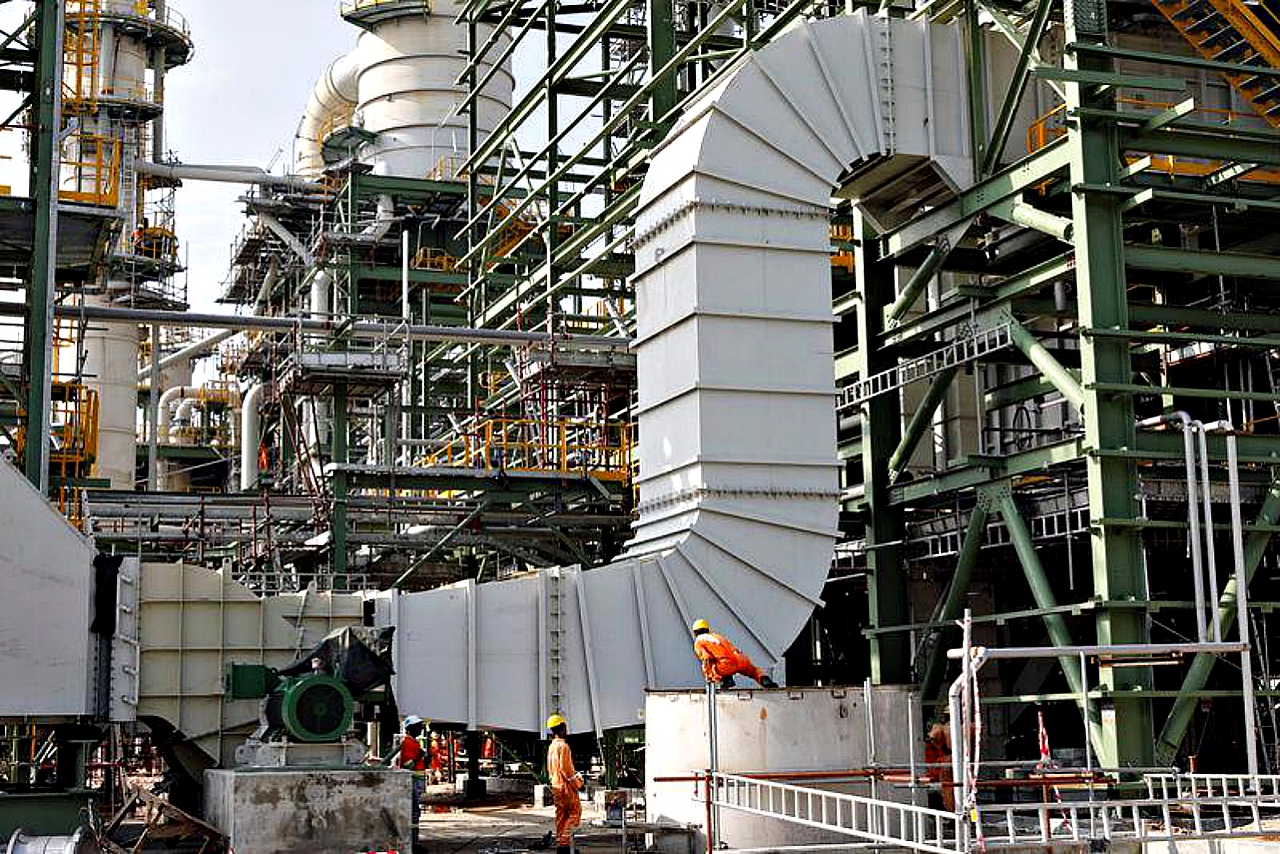
Dangote Oil Refinery under construction. PHOTO/Reuters
To ensure cleaner fuel in the sub-region, the Dangote Oil Refinery is being designed to accommodate multiple grades of domestic and foreign crude, and process them into high-quality gasoline, diesel, kerosene, and aviation fuels that would meet Euro V emissions’ specifications, plus polypropylene. The facility, will be integrated with a petrochemical unit that will produce polypropylene and fertilisers.
Edwin also indicated that Nigeria would soon become the largest exporter of fertilizer in Africa as the Dangote fertilizer Company is set to commence full production. Pre-commissioning activities have started while construction work is still on-going at the Dangote Refinery site.
Speaking also, the Vice President of Ghana, Mahamudu Bawumia, assured stakeholders in the petroleum downstream industry that the government would create an enabling environment for downstream business to thrive competitively, efficiently and with the highest of safety standards.
“Government, through the Ministry of Energy is in the process of ensuring institutional and regulatory re-alignment of the midstream gas subsector to bring clarity and a degree of certainty to players within that subsector.”
The GhIPCON is designed to actively bring to the fore the operating industry’s perspective and guidance on issues of governmental and regulatory policy, as well as best practices for the advancement of the industry across West Africa.
The conference witnessed a convergence of about 250 regulators and downstream industry stakeholders from across the West African sub-region and beyond. The event stimulated regional discussions that set the tone for a West African policy framework on the outlook of the petroleum downstream industry, regulate petroleum downstream infrastructure projects, efficiency and financing.
Topics discussed at the event include ‘Unlocking West Africa’s Deregulatory Inertia’, ‘Making West Africa’s Refineries Work’, ‘Ghana’s Cylinder Reticulation Model’, ‘Harmonzing Sub-Regional Petroleum Products Specifications’, and ‘Challenges of Regional Distribution of Petroleum Products’.
On an earlier visit to the Dangote Refinery project, the president of Ghana, Nana Akufo-Addo, whose country has joined the league of oil producing nations, had said Africa could not wait any longer and that Ghana was specifically looking forward to the start of operation of the refinery. – (Daily Trust)
