
Business
Dangote readies $10 billion Nigerian oil refinery for 2020
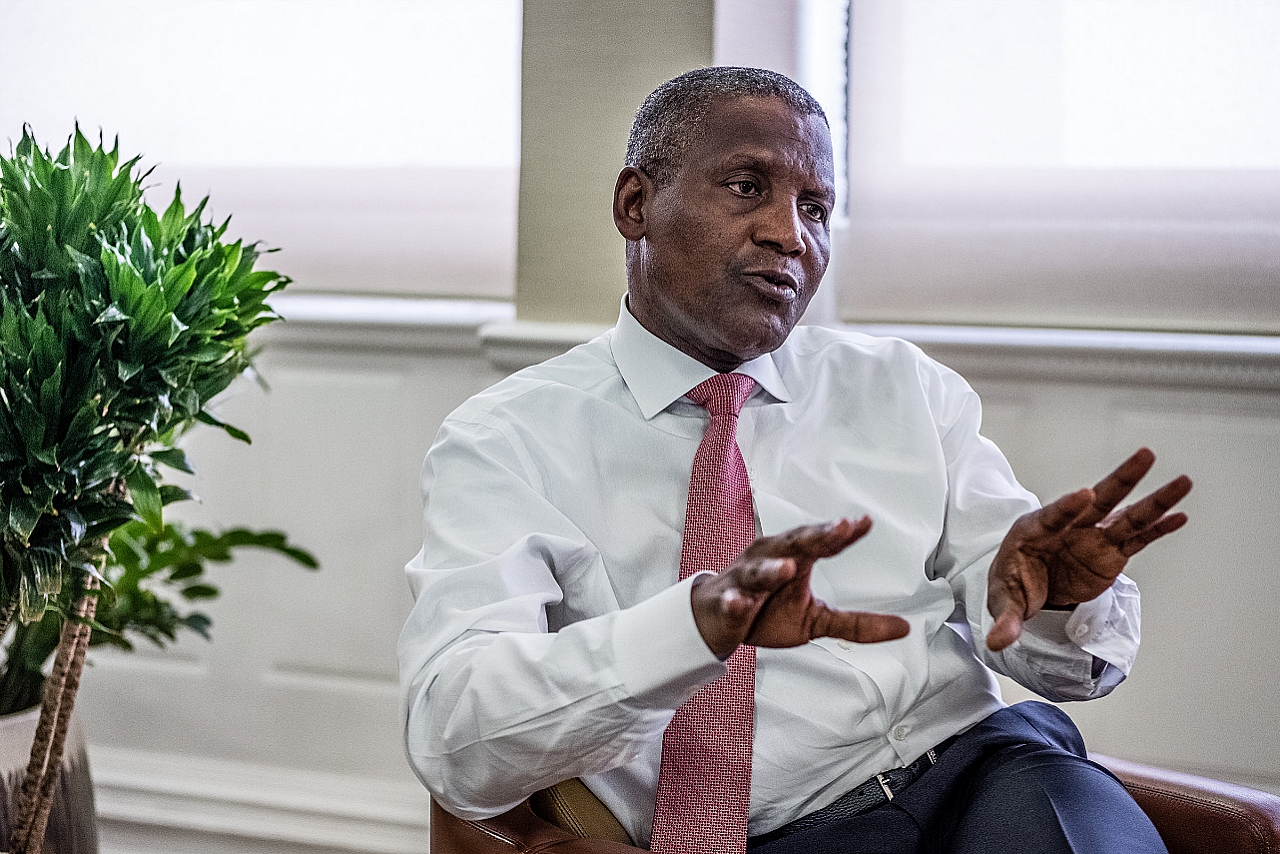
Aliko Dangote, plans to start selling gasoline, diesel and aviation fuel by early 2020 from an oil refinery he is building near Lagos, Nigeria’s commercial capital.
The US$10 billion refinery, set to be one of the world’s largest and process 650,000 barrels of crude a day, should be near full capacity by mid-2020, Edwin Devakumar, group director at Dangote Industries Ltd., said in an interview at the coastal site, about an hour’s drive east of Lagos.
Dangote, has said the refinery can transform Nigeria by weaning it off fuel imports and generating foreign exchange through exports. Despite being Africa’s biggest crude producer and an OPEC member, the West African nation ships in almost all its gasoline and diesel from abroad because of the decrepit state of its government-owned refineries.
Surplus Export
Dangote’s facility will probably produce about 50 million liters (13.2 million gallons) a day of gasoline and 15 million liters (3.96 million gallons) of diesel, though output can be changed according to the demand for each product.
Nigeria, a country of almost 200 million people, consumes roughly 35 million liters (9.24 million gallons) of gasoline daily, Dangote is expected to export surpluses.
The company has been in talks with oil traders including Royal Dutch Shell Plc, Vitol Group and Trafigura Group Pte about them supplying crude and buying refined products, according to Devakumar.
“We are establishing a rapport with them, but there has been nothing specific so far,” he said.
The plant is designed to process light and medium grades of crude and produce fuels that meet international standards so that Dangote can sell them globally.
The plant will be able to use all the African crudes, American crudes and Middle Eastern crudes. It will not be able to process heavy, dirty crudes. It doesn’t make sense in today’s environment, according to Devakumar.”
Trafigura confirmed discussions had taken place. The new refinery will benefit “the West African oil market and improve fuel standards in the region,” a spokesperson said in an emailed response. Antonia Lock, a spokeswoman for Vitol, declined to comment, while Shell spokesman Bamidele Odugbesan did not immediately respond to a text message.
Upstream Investment
Dangote will start producing its own oil, partly to supply the refinery, within a few months. It aims to pump around 20,000 barrels a day from two shallow-water blocks, known as OML 71 and 72, located in the Niger River delta in south eastern Nigeria.
“We will continue to invest in upstream,” Devakumar said. “We may look for more blocks to produce up to 250,000 barrels a day. It’s where the majority of our cash flow from the refinery will go to. We’ll focus on that after we start the refinery.”
A fertilizer plant, located near the refinery, is set to produce its first batches of urea.
Costing around US$2.5 billion and with a capacity of 3 million metric tons a year, it’s set to be one of the biggest globally.
While Dangote took on a US$3.3 billion syndicated loan, which Standard Chartered Plc arranged, most of the refinery and fertilizer projects are self-funded. Both units will probably be partly sold via initial public offerings eventually.
Dangote is also building two 550-kilometer (341-mile) underwater gas pipelines from its oil blocks in the Delta to the refinery and fertilizer factory. The first pipeline was laid last year and both will probably be completed in 2 years, at a cost of US$2.5 billion.
They will be able to carry 3 billion standard cubic feet per day, which will be used to run the plants and sold to other businesses, including power stations. Only about 400 million scf of gas is distributed in Nigeria today and the new pipelines will help drive industrial development, Devakumar said.
Source: Bloomberg News
