
Business
Nigeria: Dangote oil refinery to be the 5th largest in the world
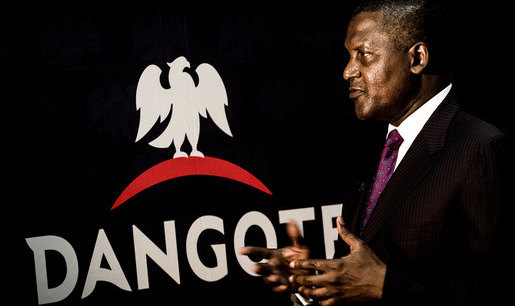
Gasoline shortages are common in Nigeria – Africa’s largest oil producer – which imports the majority of its refined fuel, straining the nation’s finances and currency. Decades of poor maintenance, corruption and mismanagement have left the country’s 4 state-owned refineries working at a fraction of their capacity.
While the worst shortage in a decade almost caused the West African nation’s economy to shut down in May, with diesel-fired electricity and phone services on the verge of collapse, the situation has created investment opportunities for entrepreneurs including Aliko Dangote – Africa’s richest man.
Dangote, who has made most of his money through his African cement business, is building a 650,000 barrel-per-day oil refinery and petrochemical plant in the commercial capital, Lagos, scheduled for completion by late 2017 to early 2018. The facility, with capacity to produce 55.2 million liters of gasoline daily, will produce other fuels as well as fertilizer and polymers.
It will be very large refinery – with the capacity to produce the entire gasoline requirements of the country.
On completion the refinery would be the fifth-biggest in the world after plants in Venezuela, South Korea and India, according to data compiled by Bloomberg. It would also be the world’s largest single-train refinery, Dangote told reporters at the construction site on January 10.
“From Nigeria all the way down the coast to Senegal and all the countries in between, there is almost no functional refinery except the one in Ivory Coast,” said Dolapo Oni, the Lagos-based head of energy research at Ecobank Transnational. “Dangote is going to be able to plug that market.”
The refinery in Ivory Coast has the capacity to process 65,000 barrels of crude daily, according to the website of the company, Societe Ivoirienne de Raffinage.
Nigeria’s refineries have the installed equipment to process 445,000 barrels of crude a day, yet they operated at an average of 5 percent of that capacity in 2015, according to the state-owned Nigerian National Petroleum Corporation (NNPC).
President Muhammadu Buhari’s administration has ruled out selling the assets, aiming to finance their revamp, even as government revenue has been cut by a more than 72 percent drop in oil prices since the 2014 peak, to an 11-year low. Oil accounts for two-thirds of Nigeria’s revenue and about 90 percent of foreign- currency earnings.
Price controls and subsidies had cost Africa’s largest economy US$35 billion from 2010 to 2014 and mainly benefited Nigeria’s elite, who consumed more fuel than the poor, according to a World Bank report. The cost of gasoline per liter in Nigeria currently stands at US$0.43, compared with US$0.74 in South Africa, US$1 in Ivory Coast, US$1.16 in Angola and US$1.04 in neighboring Cameroon, according to the website globalpetrolprices.com.
Bank of Nigeria Governor Godwin Emefiele, who was visiting the site, said the refinery could earn foreign income of US$6 billion a year, helping ease exchange-rate pressures. He pledged to provide the Dangote Group the assistance it required to secure foreign exchange to complete the plant estimated to cost about US$14 billion.
The Abuja-based central Bank of Nigeria has resorted to holding the naira at 197 to 199 per US dollar since March by introducing trading curbs to conserve reserves and stem a rout after it fell to a record 206.32 in February.
While Nigeria has more than 30 licenses issued for the building of privately owned refineries, Dangote is the first to start construction.
If Dangote is successful, “it means that Nigeria can process more than its local fuel needs and also process on behalf of others so that we may start exporting refined products rather than exporting crude,” said Bismarck Rewane, chief executive officer of Lagos-based business advisory Financial Derivatives Co. Nigeria uses about 35 million liters of gasoline per day, according to the NNPC.
The Buhari administration insists there will be room for the state-owned refineries to operate alongside the private ones. Yet with the NNPC burdened by debt of about US$5 billion owed to its joint-venture partners, it is unlikely to compete efficiently with private refineries, according to Ecobank’s Oni.
The target is to “keep them consistently producing at above 90 percent of their capacity,” Emmanuel Kachikwu, petroleum resources minister of state, said in an interview on Tuesday in Abu Dhabi. “Simultaneous with that, I am also going to be announcing a program, hopefully before the end of January, for others to come in and build new refineries.”
Source: Bloomberg
