
Business
COVID-19 is helping African economies compete
Remote commerce was part of a boom before COVID-19. Now that’s tending to limit the damage.
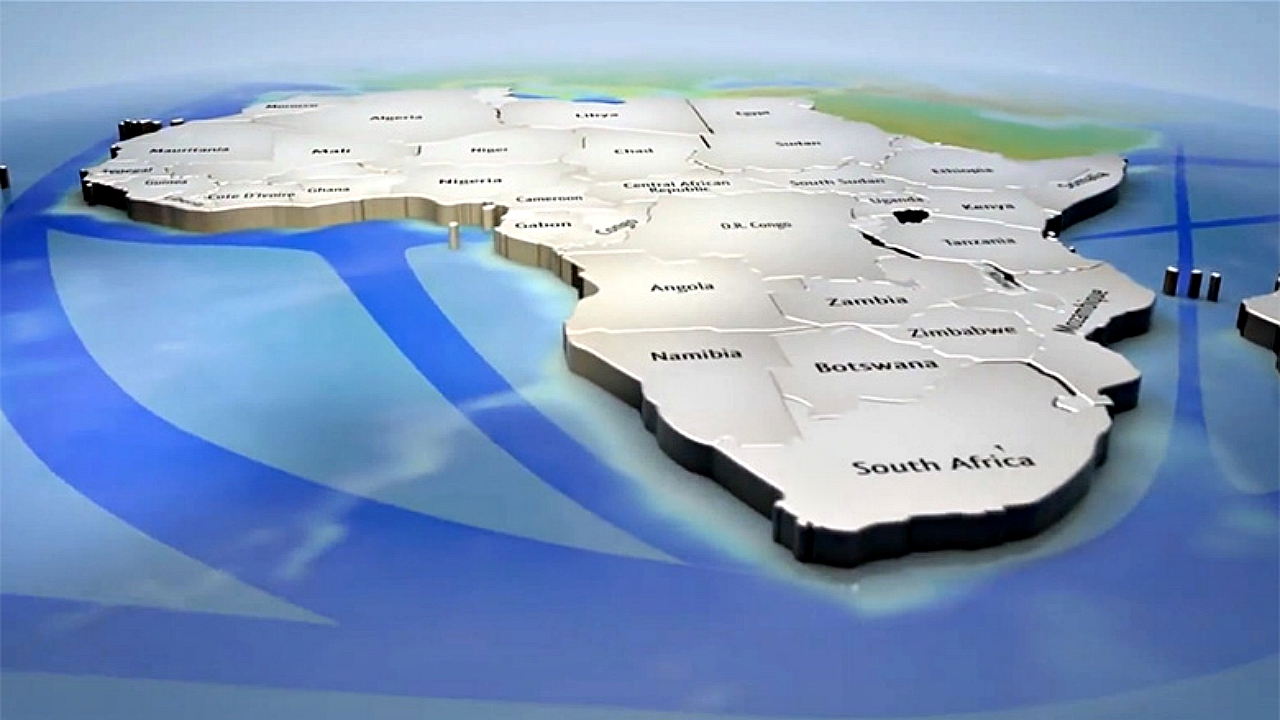
Bloomberg | When all is said and done in 2020, African economies will probably have outperformed the rest of the world during the COVID-19 pandemic. Africa’s 54 countries now include 7 of the globe’s 10 fastest-growing economies, in part because the lethal virus may have improved their competitive advantage as they accelerated their decade-long transformation from exporters of natural resources to hubs of wireless, remotely engaged commerce.
The transition to technology-driven, 21st-century business in a region where people are younger than anywhere else is reflected in the changing landscape of the 1,300 publicly traded companies that make up corporate Africa. Communications firms have become a robust presence, making up 29 percent of the total market capitalization of the continent in 2020 compared to 13 percent a decade earlier, according to data compiled by Bloomberg. Materials and energy, the region’s benchmarks since colonial times, declined to 23 percent from 34 percent during the same period.
Africa has held off the COVID-19 assault better than many developing regions. The Coronavirus had receded by mid-November in some of the continent’s largest countries – South Africa, Nigeria and Ethiopia – to their lowest levels since April or May, according to data compiled by the Johns Hopkins Bloomberg School of Public Health. In contrast, Mexico earlier this month became the 4th country to exceed 100,000 confirmed COVID-19 deaths behind the U.S. (257,929), Brazil (169,485) and India (134,218) amid a recent global virus resurgence. South Africa, Africa’s sixth-most populous country, suffered 20,968 deaths among its 767,759 COVID-19 cases.
The economies of Ethiopia, Uganda, Ivory Coast, Egypt, Ghana, Rwanda and Kenya withstood the economic impact of the pandemic so successfully that they were among the world’s 10 fastest-growing in 2020. At least 5 of them are expected to remain in that elite growth club through 2022, according to forecasts by economists compiled by Bloomberg during the past 3 months. Two years ago, Africa included only 3 of the best performers and in 2015 it had 4.
Shares of sub-Saharan Africa’s 200 largest public companies have appreciated 13 percent this year as the comparable emerging-market index gained 12 percent and the more risky frontier-market benchmark lost 3 percent, according to data compiled by Bloomberg. Corporate Africa advanced 78 percent during the past 2 years as the emerging market advanced 33 percent and the frontier market gained 12 percent. The same 200 African firms appreciated 324 percent over 5 years as the emerging market rallied 67 percent and the frontier market rose 27 percent.
Africa’s commodity-related companies led all industries with a 188 percent 2-year total return (income plus appreciation) that dwarfed the 37 percent of global peers, and its nascent technology sector returned 123 percent when the comparable global benchmark climbed 92 percent.
The tech stars include Cartrack Holdings Limited, the Johannesburg-based software maker that collects vehicle data transmitted while driving, giving users safety and performance intelligence; its share price has risen 76 percent so far in 2020. CBZ Holdings Limited, the Harare, Zimbabwe-based bank with a burgeoning digital business, was 11 times more valuable this year than last. MTN Nigeria Communications PLC, the Lagos, Nigeria-based telecommunications service benefiting especially from COVID-19 lockdowns, has rallied 58 percent in 2020; the rest of global telecom was down 1 percent.
Nigeria has had the world’s best-performing shares this year. Among the world’s 93 major equity markets, the Nigerian Stock Exchange All Share Index of 153 companies was No. 1 with a 27 percent total return, according to data compiled by Bloomberg. Communications, accounting for 28 percent of the index this year, up from less than 1 percent in 2015, gained 68 percent, surpassing No. 2 health care.
That’s a taste of the best likely to come for investors in African companies. Global X MSCI Nigeria, the largest exchange-traded fund in assets invested in the country, has the greatest discount of 32 percent, which is a record since the fund’s inception in 2013. Translation: More than 20 Nigerian companies in this ETF appreciated much faster than their global peers, to the point where they are grossly undervalued.
Just as investors snapped up the U.S. companies enabling people to work and play remotely, a similar trend is unfolding across the Atlantic. The global pandemic is everyone’s problem. It’s proving to be a profit opportunity in Africa.
