
News
Chad’s former President Hissène Habré dies of COVID-19
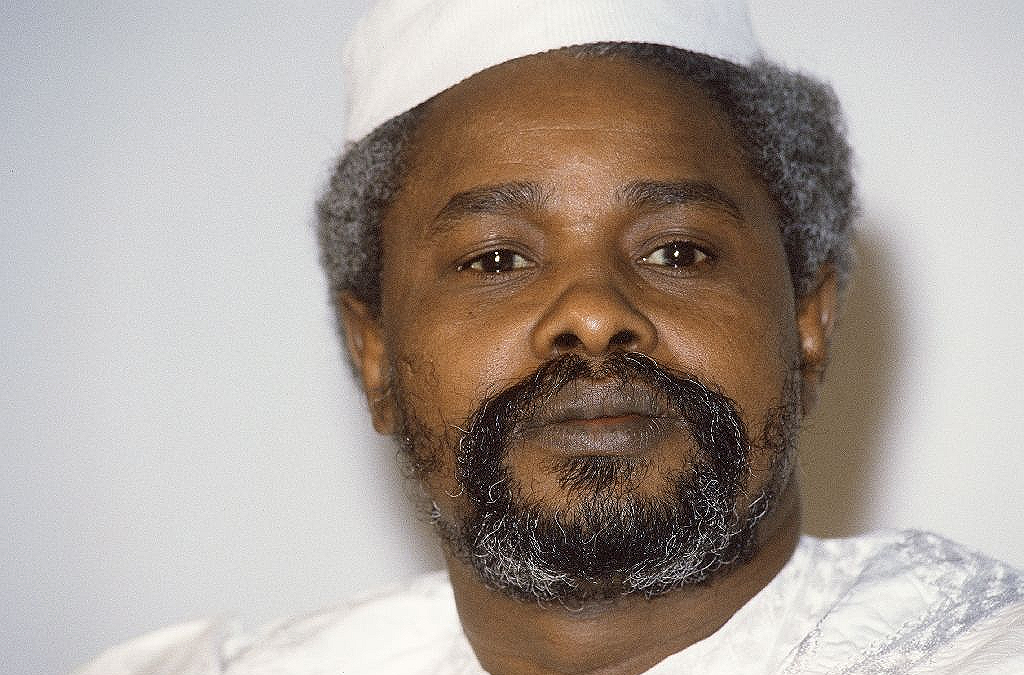
AP | Chad’s former president Hissène Habré, the first former head of state to be convicted of crimes against humanity by an African court after his government was accused of killing tens of thousands of people, has died in Senegal. He was 79.
Habré, whose case for years showcased Africa’s reluctance to put its despots on trial, had recently contracted COVID-19 according to local media reports. His death Tuesday at a Dakar hospital was confirmed by Jean Bertrand Bocande, director of the penitentiary administration.
The former leader, first arrested in 2013, had been sentenced to life imprisonment in 2016 but ultimately served about 5 years in prison following his conviction.
Human rights activists say Chad was a ruthless, one-party state under Habré’s rule from 1982 to 1990. A fearsome security service headed by members of Habré’s Gorane ethnic group was placed in every village, documenting even the slightest transgressions against the regime, they said.
The list of offenses meriting arrest included speaking ill of Habré, listening to “enemy” radio stations or “performing magical rites to aid the enemy,” according to a truth commission appointed shortly after Habré fell from power.
The commission concluded that Habré’s government oversaw 40,000 killings.
Habré was born the son of a farmer in the northern Chadian town of Faya-Largeau in 1942. The country was still under French colonial rule, and he worked as a civilian for the French military before being selected to study in France, where he earned a law degree.
He returned in 1971 to work for Chad’s foreign affairs ministry, but he soon became involved in a peasant rebellion of Muslim northerners against the largely southern-dominated Christian government.
His rise did not seem driven by ideology. The final report of the truth commission sharply criticized Habré’s opportunism, describing him as “a man without scruples” motivated by power alone. “Thus he would join with the armed rebellion one moment and with the government the next. To win over public sympathy, he portrayed himself by turns as a convinced Maoist and a fervent Muslim,” the report said.
Habré became prime minister under then-President Felix Malloum in 1978, but Malloum fell from power the following year.
In 1982, Habré deposed President Goukouni Oueddei, beginning his 8 years as head of state. Aware that his regime was under threat from Libya, Habré created his security service known as the Directorate of Documentation and Security, or DDS, not long after becoming president.
He received substantial support from the United States and France because he was seen as a “bulwark” against former Libya president Moammar Gadhafi, according to Human Rights Watch (HRW).
Habré received hundreds of millions of dollars in American aid and was invited to the White House, HRW says, while support from France came in the form of arms and logistical support.
Habré fled to Senegal after being overthrown in December 1990. For 22 years, he lived freely and comfortably even during the periods he was technically under house arrest, splitting his time between two large villas in the seaside capital of Dakar — one for his Chadian family, the other for the family he started with a Senegalese woman he took as a second wife.
All this time, his victims were working to bring him to trial and they filed a case against him in Senegal in January 2000. He was indicted the following month, but his lawyers successfully moved for the case to be dismissed, arguing that Senegalese courts could not judge someone for crimes committed in Chad.
A separate case was initiated in Belgium, and Habré was indicted there in 2005. But Senegal refused to take any action. In collaboration with the African Union, Senegal established a special tribunal to try Habré, and he was finally arrested in June 2013. Two days later, the court formally charged him with war crimes, crimes against humanity and torture.
