
Business
Barbados in a good position to weather economic – Expert
Growth projections from the IMF put the turnaround at around 7.4 percent
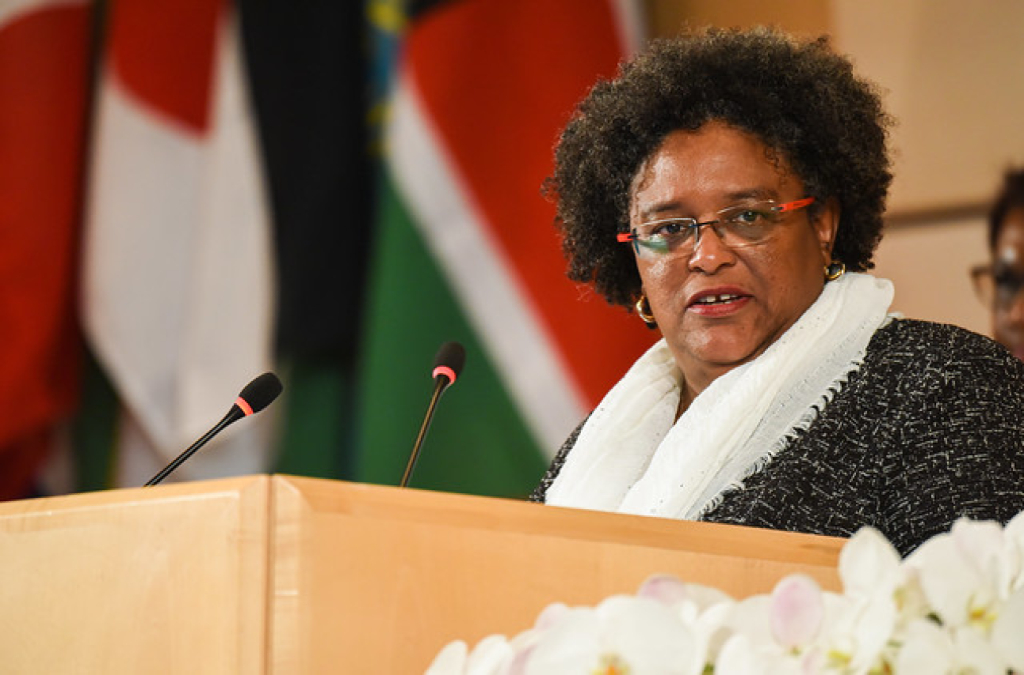
BNAmericas | Although Barbados is facing the worst economic decline in over 70 years, funding and a well-crafted budget could strengthen the country’s position, according to Dalano DeSouza, an assitant lecturer of Economics at the University of the West.
Prime Minister Mia Mottley will present the 2021-2022 budget on March 31.
“The estimated 18 percent gross domestic product (GDP) decline in a single year experienced by Barbados is in line with the fortunes of almost every economy globally. Certainly, in the post-war dispensation there hasn’t been a year like 2020.”
Mottley promised the budget will not contain tax increases, although Barbados had borrowed BDS$1 billion (US$500 million) “to keep the economy together,” Nation News reported.
The Mottley administration has even kept its legal commitment to paying out BDS$62.6 million (US$31.3 million) in tax refunds.
“Tax increases at a time when the economy is in the grips of a pandemic would not be prudent fiscal policy,” DeSouza said. “Unlike the United States, Barbados does not have the luxury of using such vast stimulus spending, and so the move to pay out tax refunds is a creative way to provide a needed injection into the economy.”
According to Mottley, value added tax receipts will drop to BDS$700 million (US$350 million) from BDS1 billion (US$500 million) in 2020, and income tax is projected to fall from BDS$493 million (US$246.5 million) in fiscal year 2019-20 to BDS304 million (US$150 million) by the end of the current fiscal year.
DeSouza said the IMF extended fund facility (EFF) and public spending cuts will help avoid new taxes.
Mottley told the national assembly that the country lost BDS$2 billion (US$1 billion) in economic activity in 2020 and 38,000 workers had to apply for unemployment benefits.
She warned of a nominal GDP reduction of BDS$2 billion (US$1 billion) and a tax revenue drop to BDS$2.34 billion (US$1.17 billion) from BDS$3.56 billion (US$1.78 billion).
Capital works programs will become important. They include a savings scheme that redirects public expenditure for wages to capital expenditure. Works will include major road network repairs and upgrades, an airport rehabilitation and tourism projects.
Private sector projects include works on the Hyatt Hotel, the Sandals resort expansion, and Sagicor’s development at The Estates in St George.
“I believe that Barbados is in a good position to weather the storm. Foreign reserves are at historic highs, the government is accessing concessionary financing, and the Mottley administration is trying to address some of the fallout from the decline in tourism with creative programs to tackle unemployment and maintaining infrastructure,” DeSouza said.
Challenges include unemployment, which had drained the fund following over 50,000 claims. In November, the UN estimated the 2020 unemployment rate at 10 percent. Declining tax revenue and other fiscal challenges will continue to require the government’s intervention, according to DeSouza.
“I predict that the economy will rebound in 2021. Growth projections from the IMF put the turnaround at around 7.4 percent,” DeSouza said.
“My expectation is that as the vaccination rollout continues both here and internationally, economic activity and therefore government revenue would rebound during the year, similar to what we saw in the fourth quarter of 2020 when Barbados was fully open for business.”
