
News
Raised overseas, Southern Sudanese are returning home to help world’s newest nation grow up
JUBA, Sudan — Lual D’Awol cultivated a passion for rap and basketball while living in Baltimore. Today he is in Southern Sudan, which becomes the world’s newest nation this weekend.
Southern Sudanese are returning to what will soon be the world
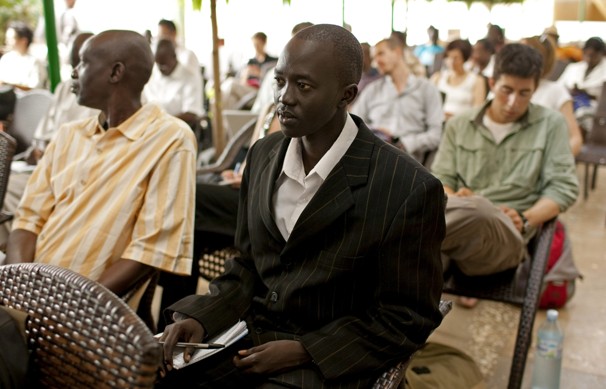
Lual D’Awol cultivated a passion for rap and basketball while living in Baltimore. Today he is in Southern Sudan, which becomes the world’s newest nation this weekend.
Southern Sudanese are returning to what will soon be the world’s newest country capital — Juba — to a home many never knew. Some are finding the adjustment a challenge. Others, like D’Awol, are excited to be back.
“I chose to come early so I could be involved in the whole referendum process and to see the birth of our nation,” said D’Awol. “I’m going to stay here. I’m not going to go back (to the U.S.) because I don’t really have anything else that I need to do over there.”
Through the decades of civil war fought by north and south Sudan, thousands of “Lost Boys of Sudan” spent years drifting throughout their country while fleeing bloodshed and famine before landing in the U.S., Europe and other African countries.
D’Awol, 26, was one of the lucky ones. He was born to diplomat parents who were abroad for much of the war. Born in New York City, he’s now back in Juba doing work as an auditor for a project funded by the U.S. government’s aid arm. A rapper in his spare time, his latest song is titled “Scattered Overseas.”
His message to his fellow citizens: “I think they should come back.”
More than 4 million southerners left their homes, many on foot, as two decades of conflict raged between Sudan’s north and south. They ended up in neighboring African nations like Egypt, Ethiopia, Kenya, and Uganda. A lucky few found refugee status in Western nations.
For those growing up overseas, returning can be a form of culture shock. Southern Sudan’s infrastructure is elementary at best. The security situation, always tense, is worsening, particularly in north-south border areas. Nepotism and corruption are common.
But the desire to return home can override the challenges.
“I always wanted to come back and I always knew that I had to,” said Mading Ngor. “After losing my relatives in the war I felt a sort of moral obligation to contribute to the country. I came also see whether there was a place for me in this new republic.”
Ngor, 28, grew up in Alberta, Canada, where he studied journalism at Grant MacEwan University. He is viewed as an outsider here — by the motorcycle taxi drivers and from relatives in the rural village where he was born. He is looking to balance both his Sudanese and Canadian heritage.
“I came as a journalist because independence is the story of the century and I wanted to be part of that,” he said. “And to assess whether it’s really home or not.”
Southern Sudan voted in a January referendum to break away from the north, something that happens on Saturday. Excitement is growing in Juba as a day of celebration sought for decades becomes reality.
Not everything is rosy, though. One former Lost Boy who grew up in America’s south has relatives in the government and guerilla movement turned national army said he could not have his name published due to that reason. But he warned that even though millions of southerners sacrificed their lives to win independence, an old African problem — government corruption — is increasing.
