
Business
JPS clamps down on illegal customers
THE JAMAICA Public Service Company (JPS) says it is moving with dispatch to regularise 106,000 households stealing electricity from its power lines. The utility company has declared it has made significant inroads…
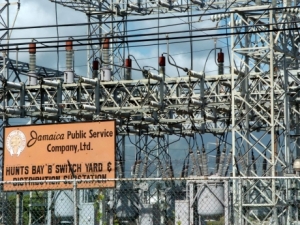
The Jamaica Public Service Company (JPS) says it is moving with dispatch to regularise 106,000 households stealing electricity from its power lines.
The utility company has declared it has made significant inroads into tough inner-city communities that were virtually impenetrable and previously subsidised by legitimate bill-paying customers.
Damian Obiglio, president and chief executive officer of the JPS, said the loosening of the iron grip on Tivoli Gardens, west Kingston, when the security forces carried out a massive operation in May 2010 to serve an arrest warrant on Christopher ‘Dudus’ Coke, was the catalyst that paved the way for the company to penetrate other inaccessible communities.
“I must admit that it was the success of the Tivoli Gardens event that we were able to go into some of the communities. Before, we couldn’t go into those communities,” Obiglio admitted at an Editors’ Forum last Thursday at North Street in Kingston.
The JPS boss said that in some instances, the delinquency rate had been reduced from a high of 80 per cent to eight per cent.
Illicit power-line connections
However, the company still has to grapple with illicit connections on JPS power lines spanning some 135 communities.
He said the company was in the process of investing $30 million in new installation for inner-city communities.
Last year, more than 14,000 households that previously used electricity without paying for it were pulled into the JPS bill-paying net. For the current year, the company is seeking to bring on board 22,000 people who have been using the JPS power illegally.
The JPS boss conceded that the theft of electricity in Jamaica was significant when compared to the United Kingdom and New Zealand.
He pointed out that in any regulatory system, all customers subsidised losses of electricity.
“Technical loss of electricity now accounts for 21.7 per cent; 11.7 per cent is theft of electricity,” Obiglio said.
Source: The Gleaner
