
News
Guyana denounces Venezuela’s approval of a referendum endorsing the annexation of a contested territory
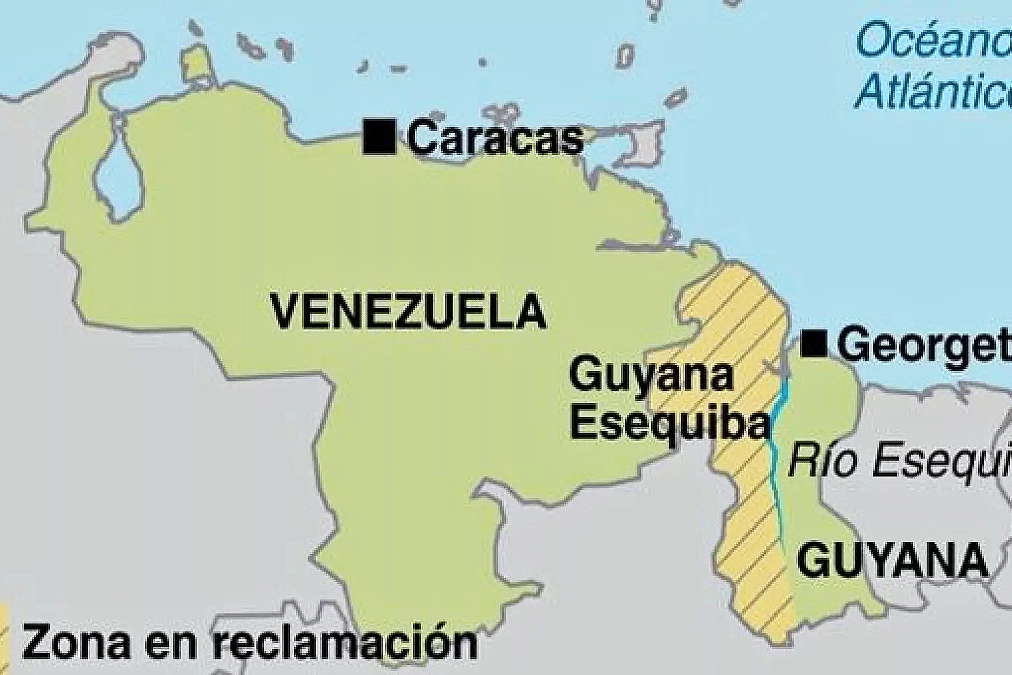
Venezuelan President Nicolás Maduro’s recent endorsement of a law reflecting the outcome of a referendum, which asserts ownership of two-thirds of Guyana, has ignited strong opposition from the neighboring Caribbean Community (CARICOM)-member state.
While the specifics of the law remain undisclosed, Guyana’s Ministry of Foreign Affairs has firmly declared its refusal to cede any territory to Venezuela. Describing Venezuela’s claim over Guyana’s western Essequibo region as a flagrant breach of international law, Guyana vows to uphold its sovereignty.
Maduro conducted a referendum in early December, seeking sovereignty over the resource-rich Essequibo region, which he argues was unlawfully taken during border demarcation over a century ago. With a signing ceremony on Wednesday, Maduro officially enshrined the referendum’s outcome into law, hailing it as a significant historical moment.
In response, Guyana swiftly rebuked Maduro’s actions, asserting that any territorial disputes should be resolved through proper international channels, such as the International Court of Justice.
The practical implementation of Venezuela’s jurisdictional claims over Essequibo remains ambiguous. Maduro mentioned retaining control over appointing an Essequibo governor until the resolution of the dispute, with the National Assembly exercising legislative authority over the territory. However, specifics were not provided.
The longstanding dispute between Guyana and Venezuela escalated notably after significant oil discoveries near Guyana’s coast in 2015, which overlap with the disputed territory. In 2018, Guyana brought the case before the United Nations, seeking affirmation of a 1899 border decision. Conversely, Venezuela argues that a 1966 agreement invalidated the initial arbitration.
Despite ongoing legal proceedings, tensions persist. Guyana has collaborated with several nations, to bolster its military preparedness against potential annexation attempts. Meanwhile, Venezuela has been observed deploying troops and expanding military infrastructure along the shared border.
Efforts to ease tensions, including a meeting between the presidents of Guyana and Venezuela in St. Vincent & the Grenadines in December, have not yielded tangible resolutions. Regional leaders have advocated for dialogue, yet the territorial dispute remains unresolved, with both parties agreeing only to refrain from threats or the use of force against each other.
