
News
Guyana and Venezuela making presentations on border dispute before the ICJ
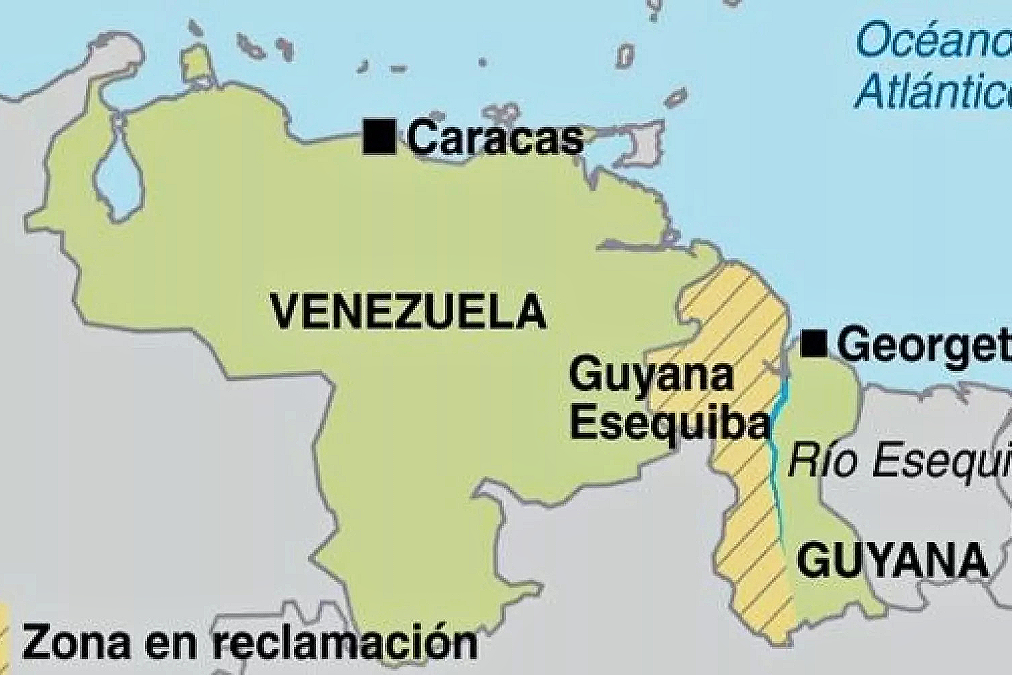
Guyana on Friday urged the International Court of Justice (ICJ) to dismiss as “both legally unstoppable and entirely without foundation” Venezuela’s preliminary objections regarding the border dispute between the two countries.
“Guyana will demonstrate today that Venezuela’s preliminary objections are both legally unsupportable and entirely without foundation,” said Carl Greenidge, the Agent of Guyana in the case concerning the Arbitral Award of October 3, 1899.
Greenidge told the ICJ panel of judges, headed by its president, Joan E. Donoghue that in December 2020, the ICJ ruled that it has jurisdiction over the case, rejecting Venezuela’s objections in this regard. Then, on March 8, 2022, Guyana filed its Memorial on the merits of its case against Venezuela in accordance with the Order of March 8, 2021, of the Court.
He said Guyana has been complying with requirements from the court because the country remains committed to international law, describing Venezuela’s preliminary objections as a tactic meant to delay the Court’s assessment of Guyana’s merits in the border controversy.
Greenidge said this tactic is all the more apparent given Caracas’ non-participation in earlier proceedings at the ICJ. But he told the panel that Venezuela’s belated engagement with the Court indicates that the country is finally accepting the legitimacy of the Court in settling this controversy.
“It is apparent that it accepts the legitimacy of the Court’s role, its power to dispense justice, and the binding effects of the Court’s orders and judgments,” Greenidge said on Friday.
Venezuela had earlier this week, said the ICJ could not hear the case and that the 1899 Arbitral Award is a full, final, and perfect settlement of the land boundary between the two countries because Britain is not a party to the proceedings.
Venezuela’s Vice President Delcy Rodriguez told the ICJ that her country maintained that the ICJ does not have jurisdiction to entertain the case while urging it to find that Guyana’s case should be deemed inadmissible. She said the 1966 Geneva Agreement provides for an “amicable solution” to the dispute after the 1899 Arbitral Tribunal Award.
“We submit that this court would not be in a position to resolve Guyana’s application because the United Kingdom, an indispensable party to settle such a matter of the dispute requested by Guyana is not participating,” she told the judges.
“The United Kingdom never had title over the territory over Guyana Essequibo,” she said, accusing the UK of shifting the boundary unilaterally throughout the 19th century by asserting new land rights reflected in “doctored maps containing falsified border lines in its favor” to voraciously govern gold mines and other natural resources.
Rodriguez said the UK had stated that the new border line had not been subject to negotiation and any action could be greeted with the use of force. -(CMC)
