
Business
From Storefront to Wall Street, Ernesta G. Procope Has Blazed Trails in Insurance and Real Estate
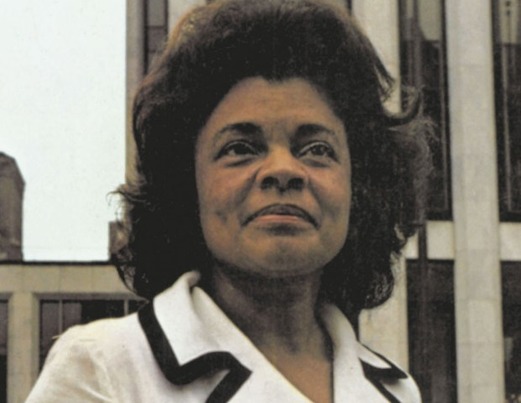
History-makers seldom have an example to follow; they make a path for others to follow them. Taking on an industry that didn’t see people like her set Ernesta G. Procope apart from the very beginning. Having a successful business as a black woman in the ’50s was rare; establishing a profitable venture on Wall Street in 1979 was an even greater accomplishment.
Procope blazed a new trail not only for African Americans, but for women. Black Enterprise’s A. G. Gaston Lifetime Achievement Award “recognizes the entrepreneurial spirit and the guiding light of an individual who has established an extended and consistently distinguished record of success.” Who better fits that image for the company’s highest entrepreneur award than Procope.
Building on a needed commodity, specifically in the black community, Procope saw an opening that would help her business. At that time, insurance companies shunned the predominantly black Bedford-Stuyvesant neighborhood, although the area was full of beautiful brownstones. Thus, in 1953, in that same area of Brooklyn, New York, she started her new business, the E.G. Bowman Co., a private insurance company that offered insurance to the residents of the predominantly black neighborhood.
Based on a suggestion by her late husband, Albin Bowman, a successful real estate broker, she started the business after he persuaded her to get her broker’s license (at the Pohs Institute for Insurance and Real Estate) so she could learn the real estate business and to insure his properties as well.
The company began as a homeowner and auto insurance agency storefront. She sold insurance but also focused on real estate development, rehabilitating and selling brownstones in Brooklyn. Speaking about that time, “I never operated with a complex—as a woman, as a black woman, as a black. But instead, as a person in business,” Procope said. “We knew there were problems, but I could not let that be a deterrent to me.”
As the real estate market succumbed to a cyclical recession, Procope had to persuade insurance companies to insure her customers. She hired limousines and brought insurance executives from Manhattan to Brooklyn to show that properties in Bedford-Stuyvesant were valuable and insurable. “They didn’t know that Bedford-Stuyvesant had substantial, middle-class homeowners, blacks and whites, who needed and deserved coverage,” she said and then added, “They were shocked.”
In 1968, Procope was influential in the creation of the Fair Access to Insurance Requirements (FAIR) Plan, when insurance executives, after the riots in the mid to late ’60s, started to pull out of urban neighborhoods en masse and began redlining minority neighborhoods. Knowing how that would hurt minority residents, she used her political influence and took this issue to New York Governor Nelson A. Rockefeller and persuaded him to support legislation to make homeowners insurance available to all in the state.
