
Business
Energy, Enery; Energy!
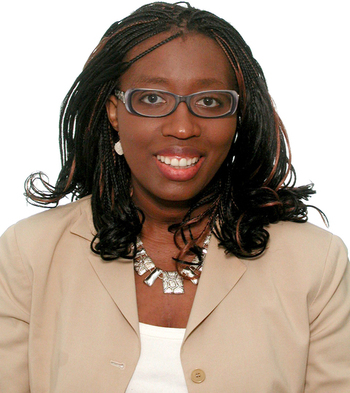
THN: From your standpoint, what should be done to enhance or increase the sheer volume of business between the U.S. and Africa?
VS: First, this has to be seen as a two-way street: On the one hand, the basket of goods approved under the AGOA market access program needs
to be expanded, especially in regard to the tariff rate quota (TRQ) on agricultural products. While I appreciate how difficult the process to achieving this might be, Africa must, at the same time, actively set about meeting the standards required to export – and this, Africa needs support from the U.S. to achieve this feat. Secondly, on the U.S. side, what we may need is a set of incentives to U.S. businesses – enabling them to come to Africa. And here, I do not necessarily mean monetary incentives. U.S. firms need to know that you can do good honest business in Africa. Therefore initiatives like President Barack Obama’s Power Africa and Trade Africa are important endorsements. Just the fact that Obama came to Senegal, South Africa and then Tanzania with leading policy makers and business people has generated a huge amount of excitement. Irrespective of how much was pledged for Obama initiatives, the exposure and interest generated may end up giving Africa returns double or triple the pledges.
U.S. businesses also stand to profit substantially from both the Obama initiatives and from the trip. So, to go back to your question, it is important
that AGOA is seen as a preference program that is mutually beneficial for U.S. and African businesses. AGOA could accelerate industrialization of the
continent, underpinned by systematic knowledge and technology transfers.
THN: Before we discuss the role the World Bank Group can play, could you just expound your comment on incentives?
VS: If we move away from just incentives, what one may have to do is provide more information about what is going on in the continent, how to invest – facilitating more American Chambers of Commerce and businesses like is done for the Asian countries. This is something that could be started in Africa, although you may not even necessarily need to do it for countries. Instead, you could focus on regions: For example, a U.S. – West African Chamber of Commerce or a U.S. – SADC Chamber could help U.S. businesses better navigate African markets.
Now, to the World Bank Group, we can write or talk about opportunities in Africa. And we could also help African economies improve their policy
via trade facilitation and in particular their Doing Business environment. This is something we are already doing. I also think we can provide risk capital or guarantees to facilitate investment.
There are many attractive business ventures on the continent and the World Bank can help identify and structure investment opportunities so they are
attractive to U.S. investors. Tullow Oil, for example, is drilling for gas in Mauritania, and the World Bank is providing a US$600 million guarantee to ensure the investment is made. We are also providing the government with a partial risk guarantee to cover associated power generation. Overall, the World Bank can help provide additional mechanisms for buying down risk on the continent.
THN: While all this is happening, what should the African countries and their governments do to help grow their portfolio of investors?
VS: The first thing on everyone’s list is that African countries should maintain sound macro economic fundamentals: Sustainable debt and deficit levels, good expenditure efficiency and levels combined with proper revenue collection. On top of lowering the risk perception, interest rates or cost of investing in the respective country, these aspects contribute to the macro economic stability package and show potential investors that countries are disciplined. Fortunately, many countries have lower deficits, lower debt to groos domstic product (GDP) ratios and acceptable current account balances, and the storyline today around Africa’s macro management is much better than it was only a few short years ago. Clearly, with the recent global financial crisis, some countries undertook counter cyclical spending, increasing the deficits – but most countries started to rein this in.
