
News
CARICOM Ministers Convene in Guyana Amid Shifting Global Trade Dynamics
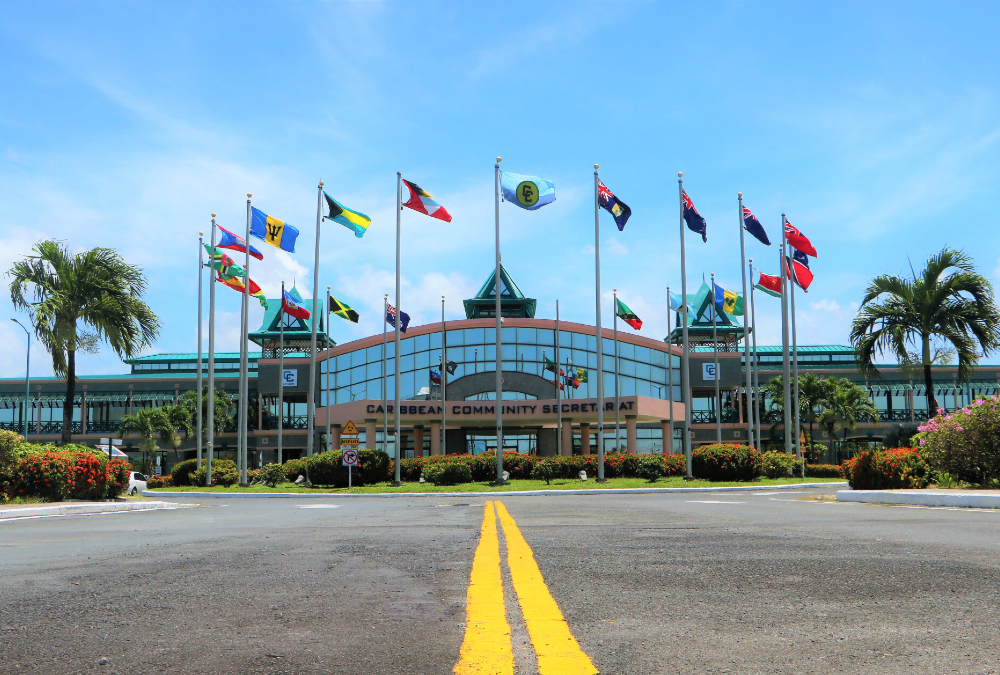
Trade and economic development ministers from the 15-member Caribbean Community (CARICOM) gathered this week for a two-day meeting amid mounting trade challenges and a rapidly shifting global geopolitical landscape.
Opening the 60th session of the Council of Trade and Economic Development (COTED), CARICOM Secretary General Carla Barnett emphasized the urgency of diversifying the region’s trade relationships. Recent tariff shocks, particularly from the United States, have underscored the fragility of current trade arrangements and the need for strategic adaptation.
“The time has come to redouble our efforts – deepening existing partnerships, exploring new markets, and strengthening regional production,” Barnett said. “Only through such action can we achieve meaningful economic growth and sustainable development.”
The U.S., under President Donald Trump’s protectionist policies, has imposed wide-ranging tariffs globally, including a 10 percent levy on most Caribbean exports, with Guyana facing an especially steep 38 percent rate. These measures, economists warn, threaten to destabilize global trade frameworks and spark broader trade conflicts.
Barnett urged ministers to prioritize ongoing negotiations with the U.S., bilateral talks with Colombia, and the final certification of the Belize-El Salvador Partial Scope Agreement. She also stressed the importance of boosting intra-regional trade by modernizing policies, supporting entrepreneurship, and eliminating longstanding compliance issues.
A key item on the agenda is the Regional Industrial Policy, which Barnett described as a potential cornerstone of deeper regional integration. “This policy must be finalized and implemented with clarity and purpose,” she said.
Collaboration among CARICOM institutions was another focal point. With limited time and resources, Barnett called for greater coordination between the Secretariat, the Caribbean Development Bank (CDB), and the CARICOM Private Sector Organisation (CPSO) to maximize impact and efficiency.
She also acknowledged CPSO’s critical advocacy work, particularly in response to U.S. trade policies affecting maritime and shipping interests.
As the meeting progresses, ministers are expected to address urgent matters including the completion of the revised Common External Tariff and the Rules of Origin Regime. Barnett encouraged full use of the CARICOM Treaty’s provisions to navigate these complex and sensitive issues.
In a time of uncertainty, the message is clear: resilience lies in unity, innovation, and decisive regional action.
