
Business
Can Africa Save BlackBerry?
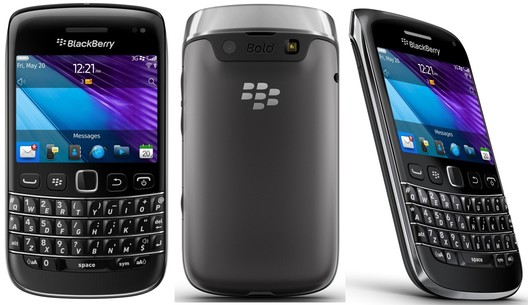
In 1999, Research in Motion, a Canadian technology firm, now called BlackBerry Ltd, launched the first BlackBerry smart phone. By the end of the first decade of the 21st century, demand for the handhelds had soared; around the world and in Africa. The timing of BlackBerry’s emergence was perfect for Africa: at the turn of the millennium, information and communications technology (ICT) adoption and mobile penetration had begun to grow across the continent. Many countries started off with mobile telephony, while broadband technology gradually permeated Sub-Saharan Africa. With Africa online, a new frontier emerged for a global, knowledge-driven economy.
Initially, the trajectory of BlackBerry’s market share caused headaches for other phone makers in Africa. The continent, which had heavily depended on feature phones and was dominated by Nokia, had discovered a new status symbol, one its growing middle class craved.
The “BB”, as BlackBerry was fondly called in Africa’s largest market, Nigeria; came with seemingly boundless possibilities for fast, multimedia communication, and the opportunities it presented were unprecedented. Dynamic and reasonably priced compared to other devices, it was soon in high demand. Fast forward five years and the revolutionary device has almost been flushed out of the market.
Global sales of the BlackBerry plummeted as recalls of Z10 handsets and job cuts at the firm made headlines. According to a September 2013 Wall Street Journal article, BlackBerry announced plans to stop selling devices to consumers (as well as a 40 percent staff cut) following a failed attempt to regain market share.
The company indicated that they would focus instead on the “corporate and professional customers who have historically made up the core of its subscriber base”. The company made negative headline after headline, announcing a loss of some $995 million in the third quarter of 2013, due to a near halving of sales to $1.6 billion, compared to net loss of $235 million and a revenue of $2.9 billion in quarter three of 2012.
