
News
BRICS leaders agree to expand membership at summit
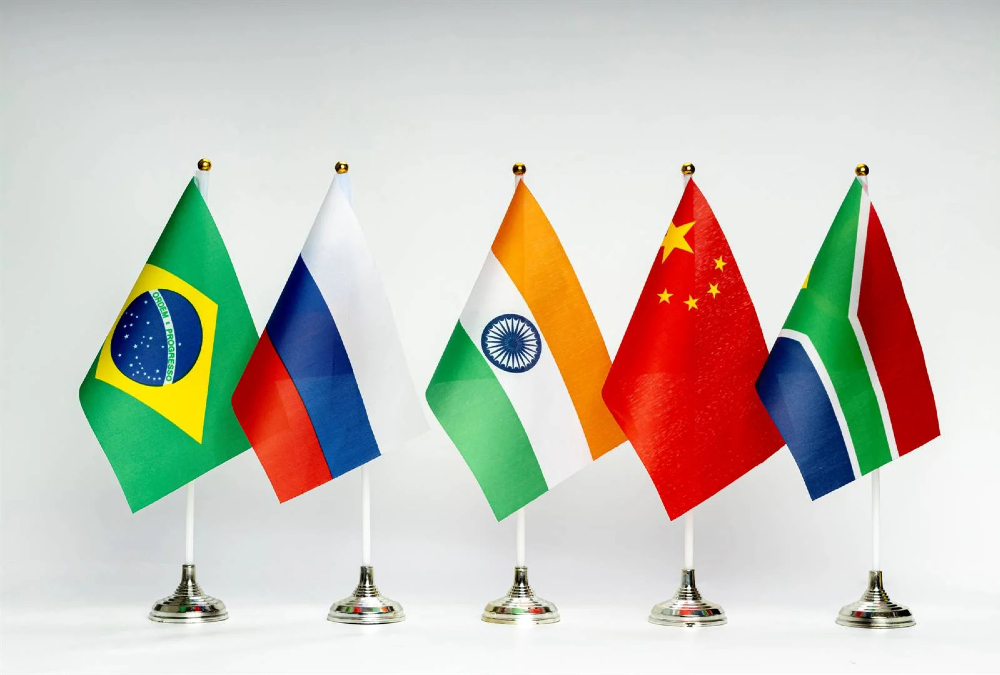
AFP | BRICS leaders have agreed to expand the club of major emerging economies and adopted conditions for entry, South Africa said on Wednesday, as the bloc pursues greater clout to shape the world order.
South African President Cyril Ramaphosa on Thursday said the BRICS has decided to invite 6 nations – Argentina, Egypt, Iran, Ethiopia, Saudi Arabia and the United Arab Emirates (UAE) – to become new members of the bloc.
We have decided to invite the Argentine Republic, the Arab Republic of Egypt, the Federal Democratic Republic of Ethiopia, the Islamic Republic of Iran, the Kingdom of Saudi Arabia and the United Arab Emirates to become full members of BRICS from 1 January 2024. We have also tasked our Foreign Ministers to further develop the BRICS partner country model and a list of prospective partner countries and report by the next Summit, a declaration on the BRICS expansion says.
Calls to enlarge the BRICS – Brazil, Russia, India, China and South Africa – has dominated the agenda at its 3-day summit in Johannesburg.
On Wednesday, South African Foreign Minister Naledi Pandor said BRICS leaders had “agreed on the matter of expansion.”
“We have a document that we have adopted that sets out guidelines and principles, processes, for considering countries that wish to become members of BRICS,” Pandor told state-run Ubuntu Radio.
“That’s very positive.”
Indian Prime Minister Narendra Modi had told the summit he supported opening the door to new members and “welcomes moving forward with consensus.”
“We stand at the cusp of expanding the BRICS family,” said South African President Cyril Ramaphosa.
The bloc makes decisions by consensus and no new members have been admitted since South Africa in 2010.
Chinese President Xi Jinping, on just his second trip abroad this year, said expanding the bloc would “pool our strength (and) pool our wisdom to make global governance more just and equitable.”
“We gather at a time when the world is undergoing major shifts, divisions, and regrouping. It has entered a new period of turbulence and transformation,” said Xi, whose nation represents about 70 percent of the BRICS total GDP.
Analysts said that in considering new members, Brazil, South Africa and India would have to balance a desire for good ties with China and Russia against the risk of estranging the United States, a major trading partner.
Like the BRICS themselves, the countries applying vary greatly, from G20 giants like Indonesia and Saudi Arabia to isolated states like Iran that are openly hostile to the United States and its allies.
Some 50 heads of state and government have joined BRICS leaders in Johannesburg.
BRICS leaders say the level of interest was proof its message resonated deeply in the “Global South” – a broad term referring to nations outside the West.
Brazil’s President Luiz Inacio Lula da Silva, who has championed the BRICS development bank as an alternative to the Washington DC-based lending institutions, said he supported the entry of Argentina.
But the South American powerhouse feared “diluting” the influence of BRICS should it expand too quickly, said Carvalho.
“There is definitely a divide on BRICS members at the moment,” he said.
