
News
Biafra leader Ojukwu dead at 78
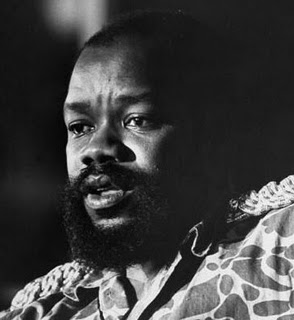
A 1966 coup led primarily by army officers from the Igbo ethnic group from Nigeria’s southeast shot and killed Prime Minister Abubakar Tafawa Balewa, a northerner, as well as the premier of northern Nigeria, Ahmadu Bello.
The coup failed, but the country still fell under military control. Northerners, angry about the death of its leaders, attacked Igbos living there. As many as 10,000 people died in resulting riots. Many Igbos fled back to Nigeria’s southeast, their traditional home.
Ojukwu, then 33, served as the military governor for the southeast. The son of a knighted millionaire, Ojukwu studied history at Oxford and attended a military officer school in Britain. In 1967, he declared the region, including part of the oil-rich Niger Delta, as the Republic of Biafra. The new republic used the name of the Atlantic Ocean bay to its south, its flag a rising sun set against a black, green and red background.
The announcement sparked 31 months of fierce fighting between the breakaway republic and Nigeria. Under Gen. Yakubu “Jack” Gowon, Nigeria adopted the slogan “to keep Nigeria one is a task that must be done” and moved to reclaim a region vital to the country’s finances.
Despite several pushes by Biafran troops, Nigerian forces slowly strangled Biafra into submission. Caught in the middle were Igbo refugees increasingly pushed back as the front lines fell. The region, long reliant on other regions of Nigeria for food, saw massive food shortages despite international aid.
The enduring images, seen on television and in photographs, show starving Biafran children with distended stomachs and stick-like arms. Many died as hunger became a weapon wielded by both sides.
“Was starvation a legitimate weapon of war?” wrote English journalist John de St. Jorre after the conflict. “The hard-liners in Nigeria and Biafra thought that it was, the former regarding it as a valid means of reducing the enemy’s capacity to resist, as method as old as war itself, and the latter seeing it as a way of internationalizing the conflict.”
The images fed into Ojukwu’s warnings that to see Biafra fall would see the end of the Igbo people.
“The crime of genocide has not only been threatened but fulfilled. The only reason any of us are alive today is because we have our rifles,” Ojukwu told journalists in 1968. “Otherwise the massacre would be complete. It would be suicidal for us to lay down our arms at this stage.”
