
News
Antigua Opposition objects to economic citizenship
The Opposition leader warns that any such programme would do irreparable harm to the country and its citizens.
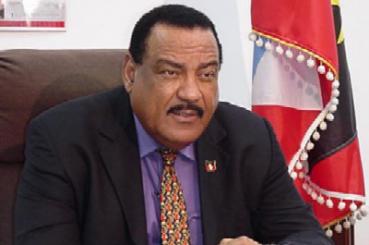
Although acknowledging that his party’s second in command had suggested that the country implement an economic citizenship programme, Antigua Labour Party (ALP) leader Lester Bird is advising government not to go that route.
He says such a programme, which gives citizenship to foreigners in exchange for just cash, or cash and investment in a country, would put the twin-island nation at risk.
The ALP’s Chairman Gaston Browne had, Bird admitted, previously proposed an economic citizenship programme, but the Opposition Leader claimed it was not like the one being explored by the United Progressive Party (UPP), although he did not specify the differences.
Last month, the government announced that it has set up a special task force to look at the feasibility of implementing the programme, but no decision has yet been taken, neither have any details been given about the basis on which citizenship would be awarded.
However, preempting an announcement, Bird said that any such scheme would do “irreparable harm to the value and standing of Antigua and Barbuda citizenship and the Antigua and Barbuda passport”.
“It is likely that major countries will clap visa requirements and other restrictions upon all holders of Antigua and Barbuda passports, so that your own travel will become difficult,” he said.
“It would be a violation of our constitution for them to either sell our citizenship or our passports, and we will not allow them to put the citizens of our country at risk,” the ALP leader added, alluding to the fact that Grenada had discarded its economic citizenship programme in October 2001, three years after it was implemented.
The Grenadian Finance Minister at the time, Anthony Boatswain, said it was just “too risky” in the wake of the 9/11 terrorist attacks in the US because Grenadian passports could end up in the wrong hands and used for purposes other than that for which they were intended.
Other economic citizenship programmes are in place in two other Eastern Caribbean states – in St. Kitts and Nevis since 1984 and in Dominica since 1991.
In St. Kitts and Nevis, an investment of at least US$350,000 in a designated real estate project is required for an investor to be considered for the programme.
In Dominica, however, there is no requirement for the applicant to make an investment in real estate. Instead massive fees are charged.
Both countries offer full, non-revocable lifetime citizenship.
Source: Caribbean360
