
Politics
Abidjan port aims for regional supremacy
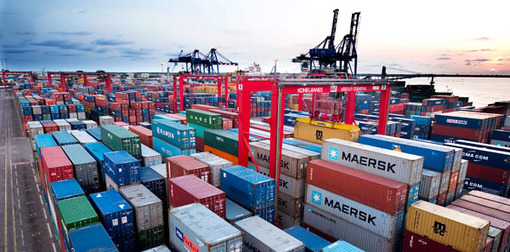
Côte d’Ivoire has launched massive upgrades to its ports to support the growth of the natural resource sector and to attract more of the regional transit trade. Buoyed by the economic recovery of the past two years and rising traffic levels, the Côte d’Ivoire government is implementing large-scale investments to upgrade its two international harbors, Abidjan and San Pedro.
The Abidjan harbor is the site of a $2.5 billion expansion project, schedule for completion by 2020. The vast project comprises of the construction of a second container terminal, the expansion of a minerals terminal and the enlargement of the Vridi Canal. Furthermore, the plans will enable the port to handle 2.25 million twenty-foot equivalent units (TEUs), which would make it the port with the largest capacity in West Africa.
The Port Autonome d’Abidjan, the country’s largest port, recorded a traffic increase of 7 percent in 2013, which is a provisional figure that does not include oil shipments. In 2012, it handled 21.7 million ton, a 31% rise from the 16.6 million ton recorded in 2011. It was also noted that container traffic also expanded 16% over the same period to 633,917 TEUs.
However, these figures are expected to rise even more. Since the economy of the world’s largest cocoa producer is bouncing back following the end of a decade-long political and social crisis in 2011, gross domestic product growth had reached 9% in 2013. Abidjan port director Yacouba Hien Sie says that the port plans not only depend on Côte d’Ivoire’s growth.
He also advised that the goal is to “re-position our port and give it the opportunity to fully play its role to the benefit of the national and regional economy.”
Disputed tender
In December 2013, the Ivorian authorities and Bolloré Africa Logistics signed a public-private partnership deal, paving the way for the construction of a second container terminal. According to the government, investment in that project will amount to as much as 403 billionn CFA francs ($825 million), including 243 billion from the government.
The new terminal will have a 1,100m long with an 18m deep dock and the work is due to last four years. The deal was signed despite a disputed bidding process. Bolloré, which already runs the first container terminal, and its partners beat bids from two groups led by Geneva-based Mediterranean Shipping Company and Marseille-based CMA CGM.
