
News
UN headquarters car bombing in Nigeria kills 18
ABUJA, Nigeria — Rescue official: At least 7 dead in car bomb attack on UN building in Nigeria’s capital.
Copyright 2011 The Associated Press. All rights reserved. This material may not be published, broadcast, rewritten or redistributed.
Read ful…
The attack was also condemned by leaders around the world and members of the U.N. Security Council who individually deplored the targeting of the U.N. at an open meeting on U.N. peacekeeping.
U.S. President Barack Obama called the attack “horrific and cowardly” and expressed strong support for the U.N.’s work.
“The people who serve the United Nations do so with a simple purpose: to try to improve the lives of their neighbors and promote the values on which the U.N. was founded — dignity, freedom, security, and peace,” Obama said in a statement. “An attack on Nigerian and international public servants demonstrates the bankruptcy of the ideology that led to this heinous action.”
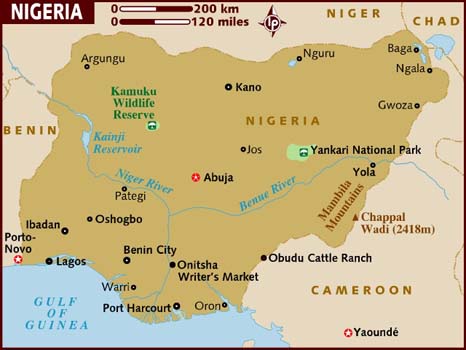
The explosion punched a huge hole in the building, located in the same neighborhood as the U.S. embassy and other diplomatic posts in Abuja. Workers brought three large cranes to the site within hours of the attack, trying to pull away the concrete and rubble to find survivors. Others at the site stood around, stunned, as medical workers began carrying out what appeared to be the dead.
“This is getting out of hand,” said a U.N. staffer who identified himself as Bodunrin. “If they can get into the U.N. House, they can reach anywhere.”
Local police spokesman Jimoh Moshood said detectives had begun an investigation.
In a statement, Nigerian President Goodluck Jonathan’s office called the attack “barbaric, senseless and cowardly.” The statement also promised to increase security in the nation’s capital.
However, Jonathan’s administration has struggled to improve security in Nigeria, a nation of 150 million largely split between a Christian south and Muslim north. The Christian president’s election in April brought religious and ethnic violence across the north that left 800 people dead.
A spokesman for Boko Haram claimed responsibility for the attack later Friday in a communique to the BBC‘s Hausa language shortwave radio service, which is widely trusted and listened to throughout Nigeria’s Muslim north. The sect has made such claims before to the service.
Boko Haram, which means “Western education is sacrilege,” has carried out a series of bombings and assassinations in northern Nigeria in the last year. It claimed a car bombing that struck Nigeria’s federal police headquarters in June that killed at least two people.
The sect came to national prominence in 2009, when its members rioted and burned police stations near its base of Maiduguri, a dusty northeastern city on the cusp of the Sahara Desert. Nigeria’s military violently put down the attack, crushing the sect’s mosque into shards as its leader was arrested and died in police custody. About 700 people died during the violence.
Sect members are scattered throughout northern Nigeria and nearby Cameroon, Chad and Niger. In the last year, they’ve unleashed a series of targeted killings and bombings.
But attacking foreigners is a new, troubling step for the group. Earlier this month, the commander for U.S. military operations in Africa told the AP that Boko Haram may be trying to coordinate attacks with two al-Qaida-linked groups — al-Qaida in the Islamic Maghreb, which operates in northwest Africa, and with al-Shabab in Somalia.
“I think it would be the most dangerous thing to happen not only to the Africans, but to us as well,” Gen. Carter Ham said Aug. 17.
The attack Friday shows Boko Haram has aspirations beyond targeting local government officials, said Innocent Chukwuma, a Nigerian criminologist and director of a police reform organization.
“Today’s has taken it to the international level,” Chukwuma said. “The choice of target shows we are perhaps dealing with a group well-connected to international networks.”
Copyright © 2011 The Associated Press.
