
News
Stop and Frisk: U.S. Justice Department wades into controversial NYPD program
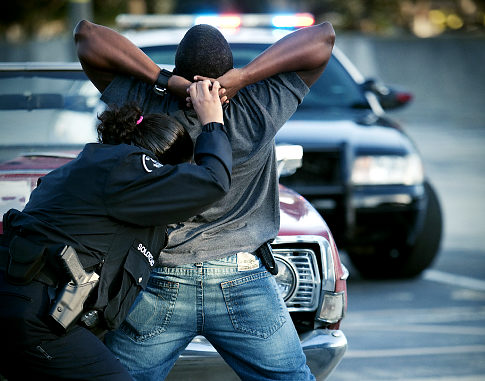
Policewoman frisking man. PHOTO/Hill Street Studios
The U.S. Justice Department has treaded carefully into the debate over the New York Police Department’s stop, question and frisk policy, telling a federal judge that it strongly endorses an independent monitor to oversee changes should she decide civil rights violations have occurred.
Lawyers for the Justice Department filed a 21-page statement of interest in the case late Wednesday, the last day to file paperwork. The court papers say the government was weighing in “only in order to assist the court on the issue of remedy, and only should it find that NYPD’s stop and frisk practices are unlawful.” It did not say whether it believed the practices to be unconstitutional.
“The department has extensive experience working to ensure that police services are delivered in an effective, constitutional manner,” the Justice Department said in a statement following the court filing. “Our statement of interest is intended to share our experience relevant to fashioning an appropriate remedy, should it be required.”
U.S. District Court Judge Shira Sheindlin is considering whether to order reforms to the police policy after a 10-week bench trial in which a dozen people testified that they were stopped by police solely because of their race.
New York police have made about 5 million stops in the past decade, most of them involving African American and Hispanic men. Lawyers for the four men who sued say hundreds of thousands of those stops were unconstitutional, and they want a monitor to oversee changes to police department training, supervision and policy.
City lawyers, the mayor and the police commissioner have all argued that the stops are not wrongful, and the policy is a necessary crime-fighting tool that has helped drive down crime to record lows. Several police officials testified at the trial about how stops are conducted, and many officers disputed the witnesses’ version of the encounter. In order to stop someone, police need reasonable suspicion, a standard lower than probable cause, which is needed to justify an arrest.
Mayor Michael Bloomberg on Thursday lambasted the idea of a monitor.
