
News
Obama to call for Justice System reform during NAACP address
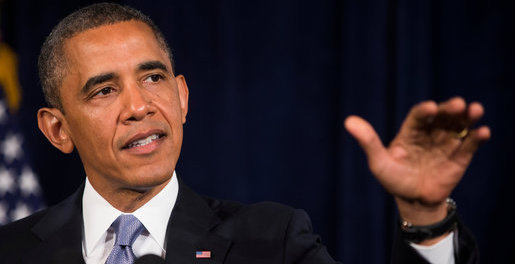
“Congress simply cannot act fast enough,” said Julie Stewart, president and founder of Families Against Mandatory Minimums. She said that while Obama’s executive actions have picked off some of the most egregious sentencing inequities, significant legislative action is needed to stop the flow of people “going to prison year in and year out, serving too much time.”
Support from tough-on-crime Republicans in any such effort is critical, Stewart said, likening it to a Nixon-goes-to-China moment.
Todd Cox, a senior fellow at the Center for American Progress, a liberal advocacy group, said there was momentum from both ends of the political spectrum to address the over-criminalization that has “resulted in people being put in prison who frankly should not be there.” His group is part of the Coalition for Public Safety, whose members and backers range from the liberal American Civil Liberties Union to the conservative Koch brothers.
In recent years, as the crime rate has dropped, long drug sentences have come under increasing scrutiny and downward trends already are taking shape.
The Supreme Court has made sentencing guideline ranges advisory rather than mandatory. Obama signed the Fair Sentencing Act in 2010 to cut penalties for crack cocaine offenses. And last year, the independent Sentencing Commission, which sets sentencing policy, reduced guideline ranges for drug crimes and applied those retroactively.
Overall, Obama has commuted the sentences of 89 people, surpassing the combined number of commutations granted by the previous four presidents. But that’s still a sliver of all those seeking clemency: Justice Department statistics show that roughly 2,100 commutation petitions have been received so far this fiscal year, and about 7,900 are pending.
Copyright 2015 The Associated Press
